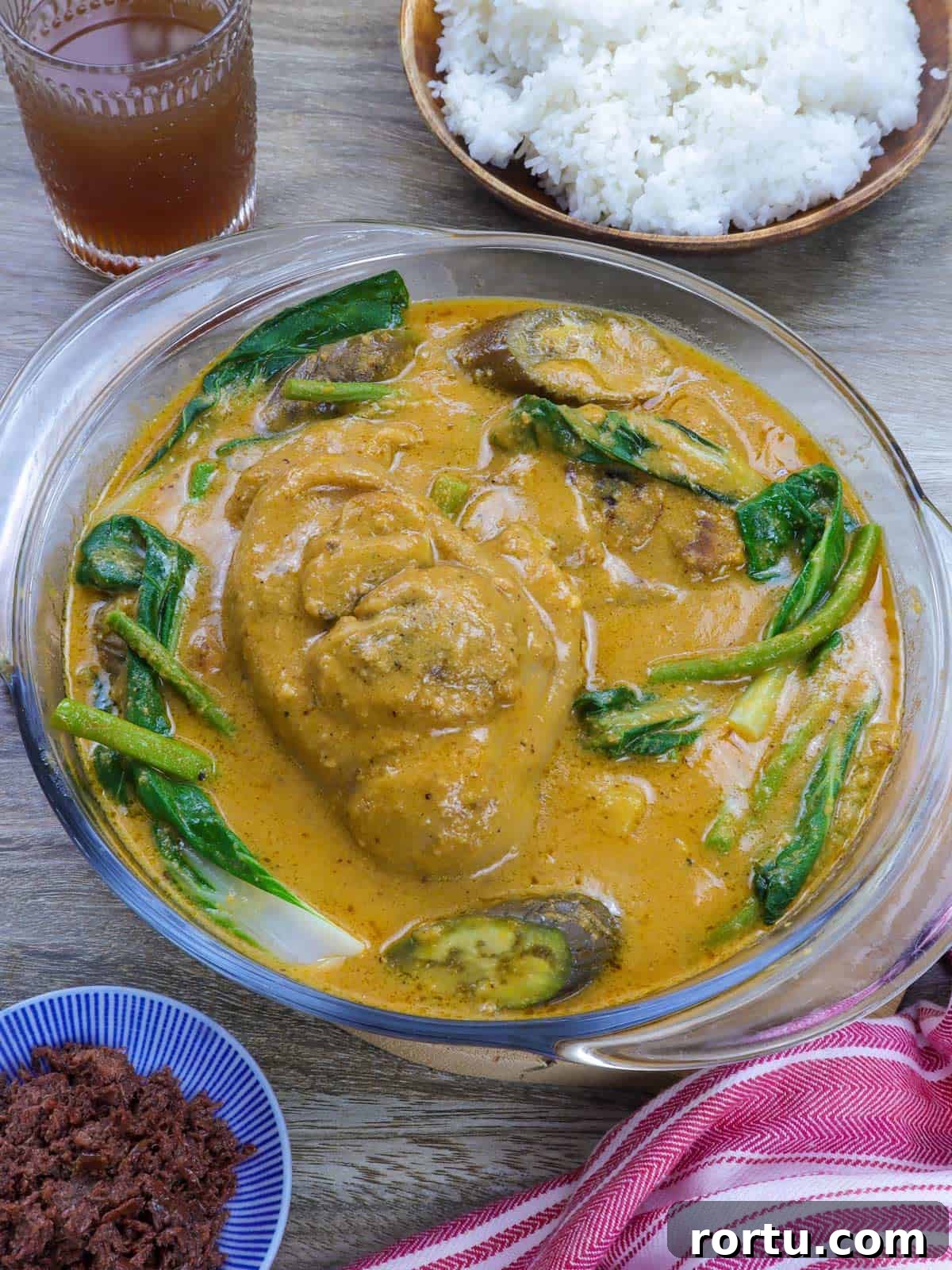
Make dinner extra special with kare-kareng pata. Quicker and more affordable than the beef version, this pork kare-kare delivers melt-in-your-mouth pork, tender-crisp vegetables, and a rich, savory peanut sauce.
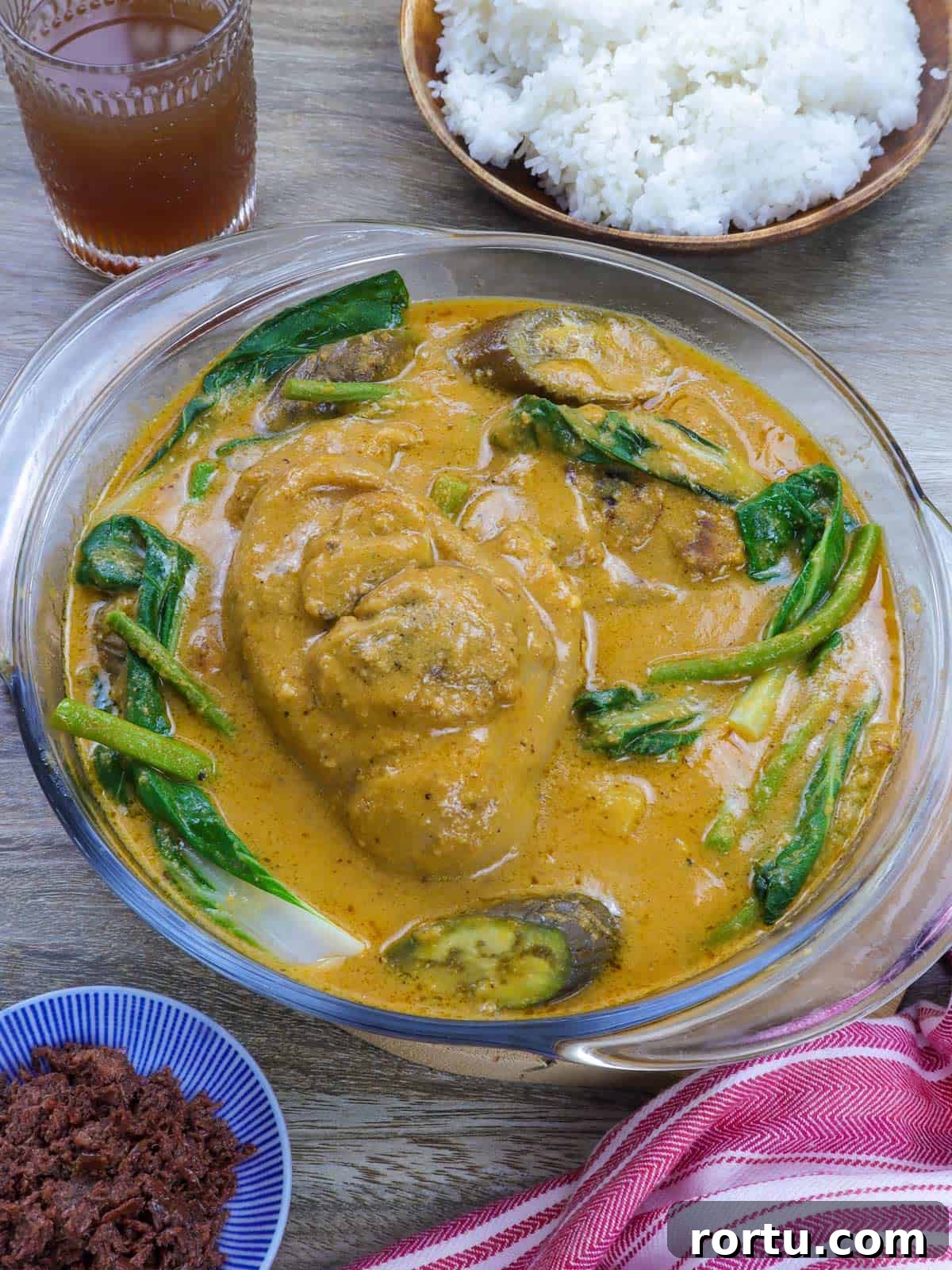
Learning to make kare-kare from scratch felt like a personal culinary milestone. This classic Filipino stew is often reserved for celebrations because of the attention it requires—tenderizing meat, toasting rice, and coaxing out peanut flavor. With a few practical shortcuts, though, you can make a homemade pork kare-kare that’s worthy of special gatherings yet practical enough for a satisfying weeknight meal.
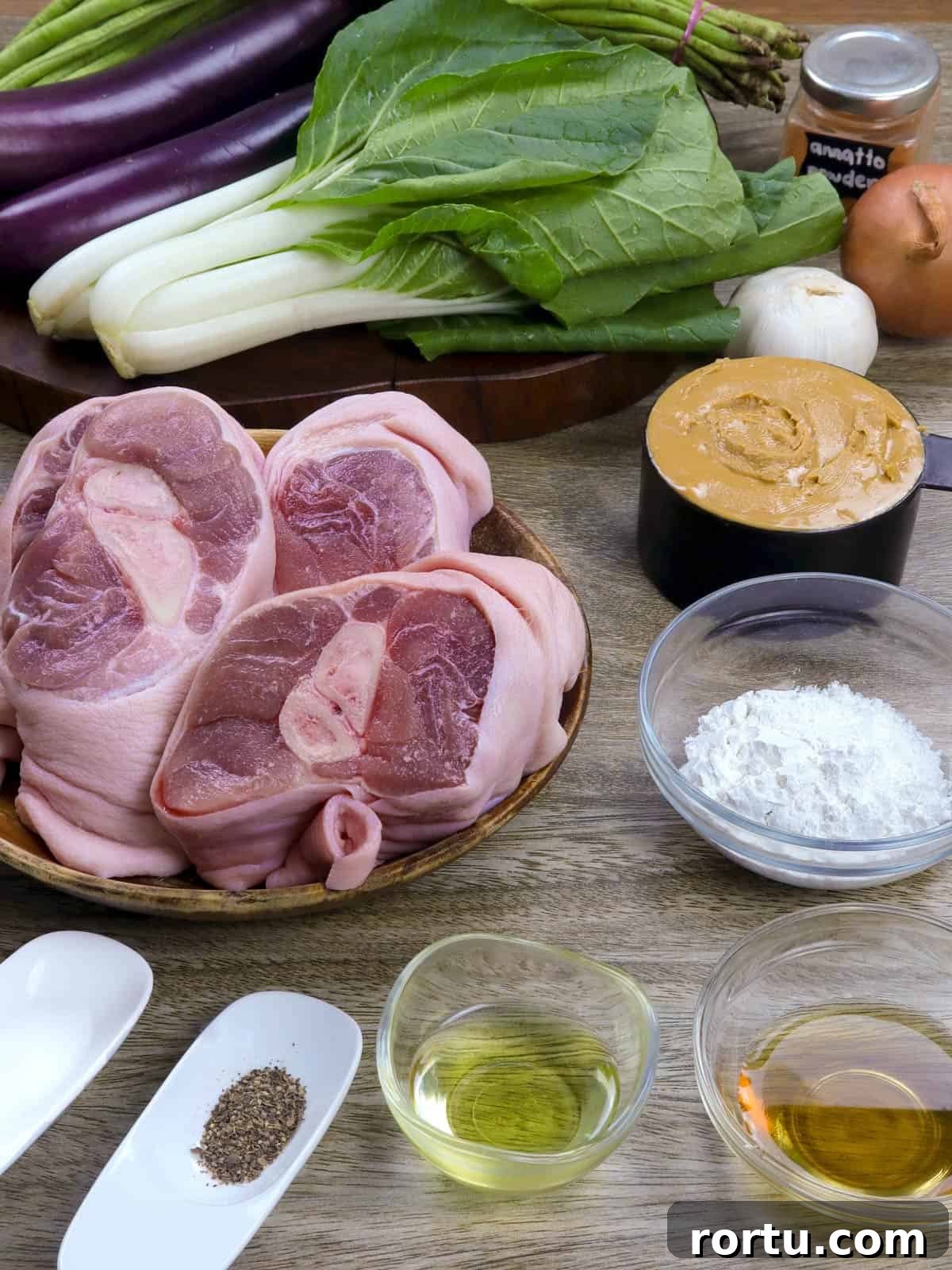
Ingredient notes
- Pork – Pata (pork shanks) with their cap of fat and skin give a silky mouthfeel when simmered. Pork belly or shoulder with skin also work well.
- Vegetables – This recipe uses pechay, sitaw (long beans), and eggplant. Substitute or add bok choy, Baguio beans, or banana blossom if you prefer.
- Rice flour – Use regular rice flour (not glutinous/sticky rice flour). Toast it briefly in a dry skillet to deepen the flavor before mixing into the sauce.
- Peanut butter – Choose an unsweetened peanut butter. Some local brands are sweetened and can make the stew cloying; look for a plain variety suited for savory cooking.
- Annatto powder – Adds the stew’s characteristic orange-red color. If using annatto seeds instead, steep them in hot water, strain, and use the colored liquid in the stew.
- Fish sauce – A few tablespoons add essential umami; adjust to taste.
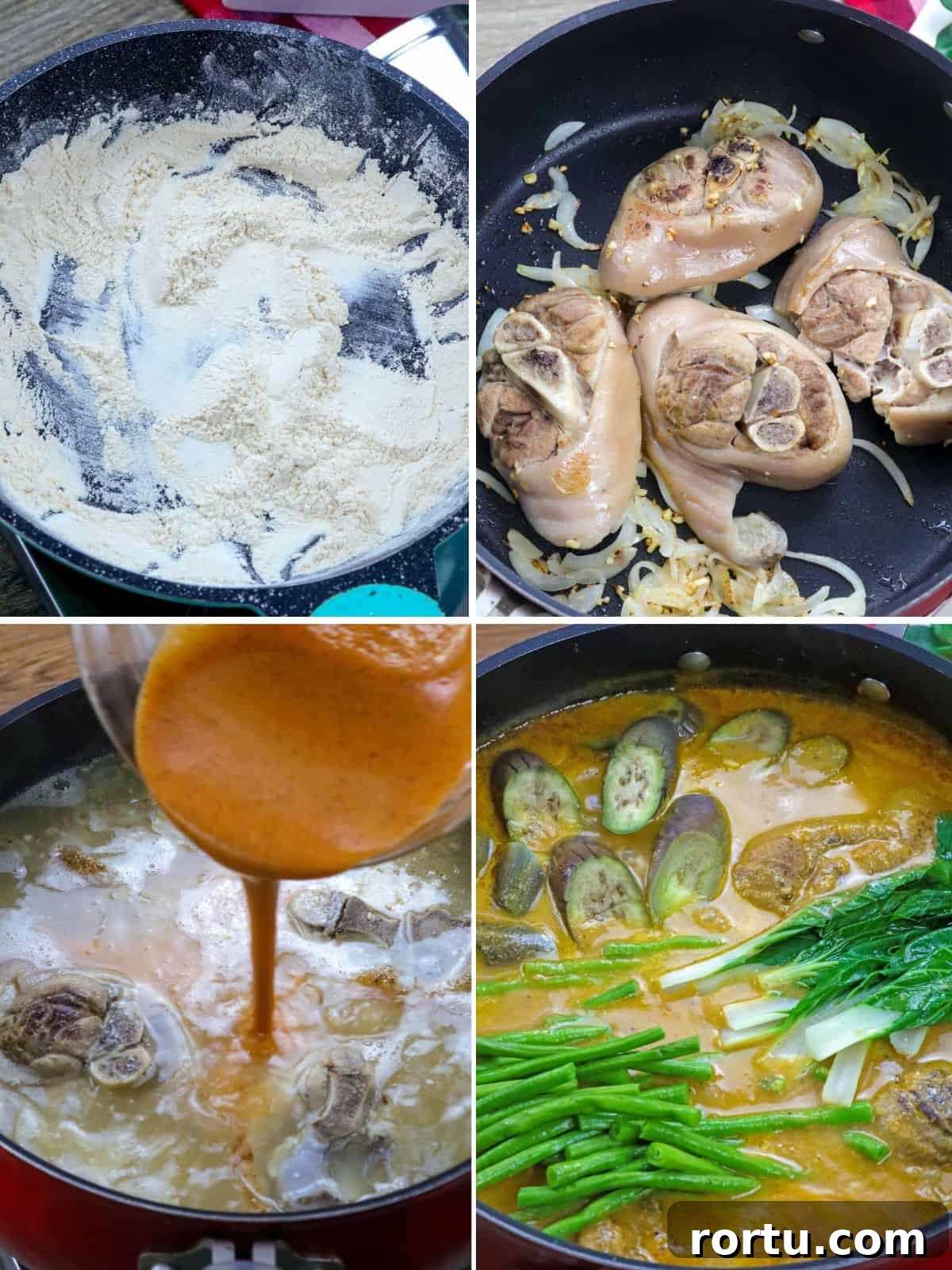
Cooking instructions
The method follows the traditional kare-kare process and breaks down into four clear stages. Below is a concise overview; follow the recipe card for exact amounts and timing.
- Simmer the pork until tender. Cover the shanks with water and simmer gently, skimming any scum. Maintain about seven cups of broth as you cook by adding water in small increments if needed. When the meat is very tender but still intact, drain the pork and reserve the broth.
- Toast the rice flour. In a dry skillet, toast the rice flour until lightly golden to bring out its aroma. Combine the toasted flour with annatto powder and a cup of reserved broth to form a smooth slurry that will thicken and color the sauce.
- Blanch the vegetables. Briefly blanch eggplant, long beans, and pechay in boiling water until they are tender-crisp. Immediately plunge them into iced water to stop cooking and preserve bright color and texture. Drain well before adding to the stew.
- Finish the stew. Sauté onions and garlic in a bit of oil, add the pre-cooked pork and brown lightly, then season with fish sauce. Pour in the remaining reserved broth and bring to a simmer. Whisk in the rice flour slurry and peanut butter, stirring to prevent lumps. Adjust salt and pepper to taste. Add the drained vegetables and simmer just until everything is heated through.
Cook’s tip
The skin around hocks and shanks is rich in collagen, which turns into gelatin during cooking. Depending on how much gelatin is in the broth, the sauce may congeal when cooled. The stew will also thicken as it stands, so add extra broth or water if you prefer a looser consistency.
Serving suggestions
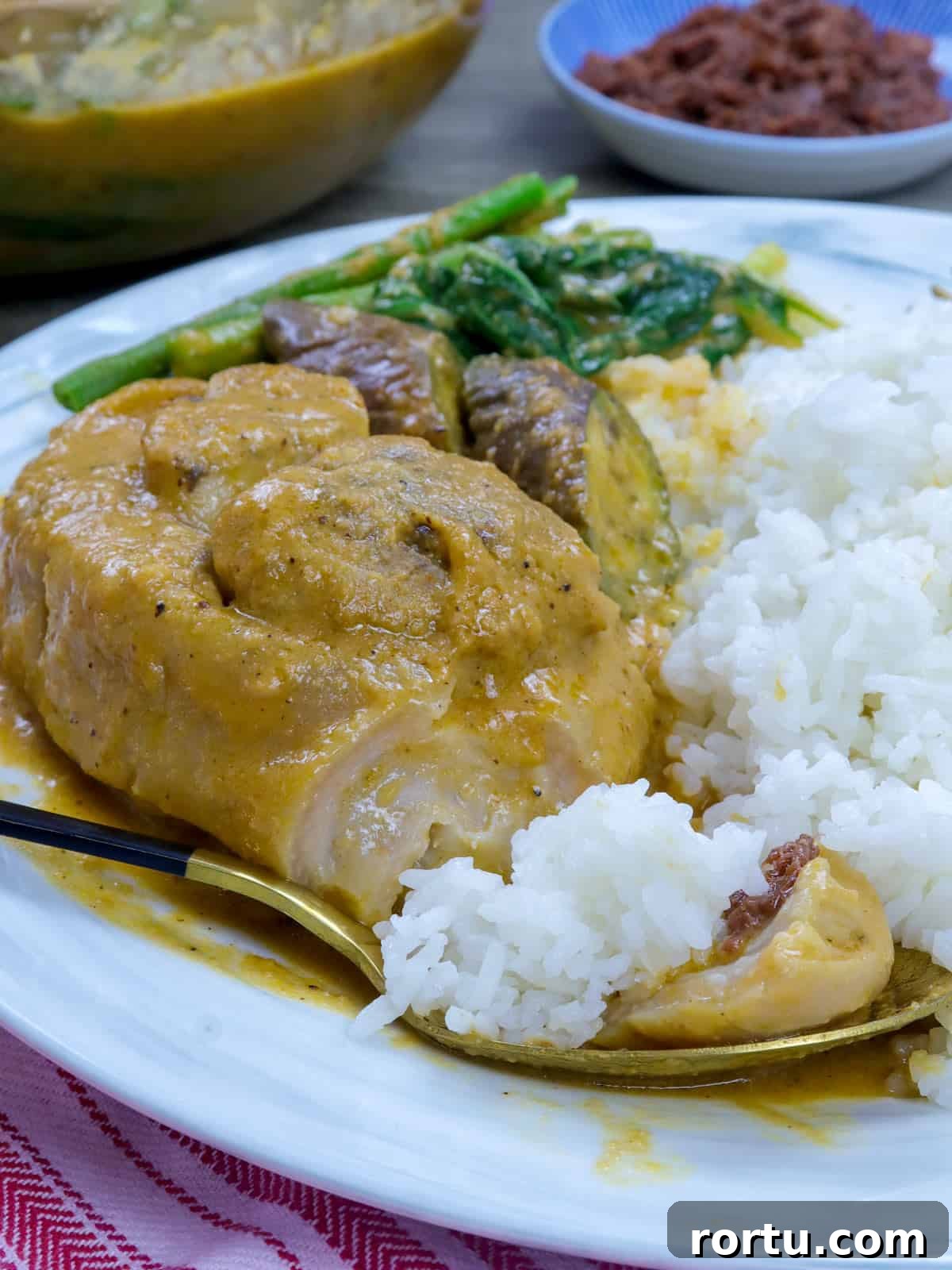
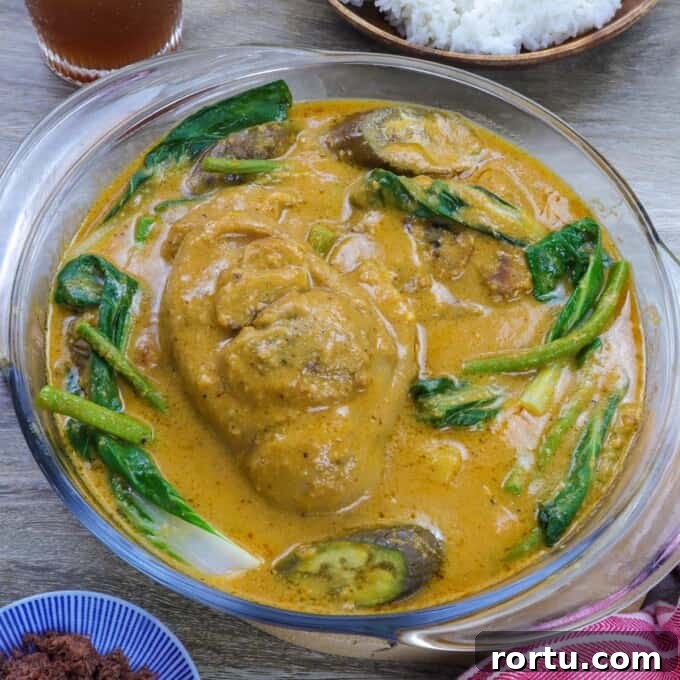
Serve kare-kareng pata as the main dish with steamed rice. Transfer the stew to a serving bowl and sprinkle crushed peanuts on top if desired. Traditionally, sauteed shrimp paste (ginisang bagoong) is served alongside as a salty, pungent condiment that complements the peanut sauce.
Storage and reheating suggestions
- Allow the stew to cool completely, then store in an airtight container. Refrigerate for up to three days or freeze for up to two months.
- To reheat, warm gently in a saucepan over medium heat, stirring occasionally. Add a splash of water or reserved pork broth to loosen the sauce and adjust seasoning before serving.
More pork stew recipes
Pork Pochero
Pork Hamonado
Chicken and Pork Adobo
Kare-kareng Pata
Ingredients
- 3 pounds pork shanks, cut into 2-inch pieces
- 2 large eggplants, trimmed and cut into 1-inch pieces
- 1 bundle long beans (sitaw), cut into 3-inch lengths
- 1 bundle pechay, ends trimmed and leaves separated
- ¼ cup rice flour
- 1 ½ tablespoons annatto powder
- 1 cup peanut butter (unsweetened)
- 1 tablespoon canola oil
- 1 medium onion, thinly sliced
- 3 cloves garlic, minced
- 2 tablespoons fish sauce
- Salt and pepper to taste
- Sauteed shrimp paste (for serving)
Instructions
- Rinse pork shanks. In a deep pot over medium heat, combine pork and enough water to cover. Bring to a boil, skimming any scum.
- Lower heat, cover, and simmer, adding water as needed to maintain about 7 cups of broth, for 1 to 2 hours or until pork is very tender but not falling apart. Drain meat and reserve 7 cups of broth.
- In a dry skillet over medium heat, toast rice flour until lightly browned, stirring occasionally.
- Whisk toasted rice flour with annatto powder and 1 cup reserved broth until smooth. Set aside.
- Heat oil in a large pot over medium heat. Sauté onions and garlic until softened.
- Add pork shanks and brown lightly, stirring occasionally.
- Add fish sauce and cook for about 1 minute.
- Pour in the remaining 6 cups of reserved broth and bring to a simmer.
- Whisk in the rice flour mixture and peanut butter, stirring to prevent lumps.
- Season with salt and pepper to taste and simmer about 10 minutes until the sauce begins to thicken.
- Meanwhile, bring 4 cups of water to a boil. Blanch eggplant about 1 minute, then transfer to iced water. Repeat for long beans (about 1 minute) and pechay (about 30 seconds). Drain vegetables well.
- Add the vegetables to the kare-kare and cook 3–5 minutes until heated through.
- Arrange on a serving platter and serve with sauteed shrimp paste on the side.
Notes
Collagen from the skin and hocks turns into gelatin during cooking; the sauce may set when chilled. The stew will thicken as it sits—add extra broth or water to reach your preferred consistency.
Video
Nutrition Information
, Carbohydrates: 38g
, Protein: 69g
, Fat: 43g