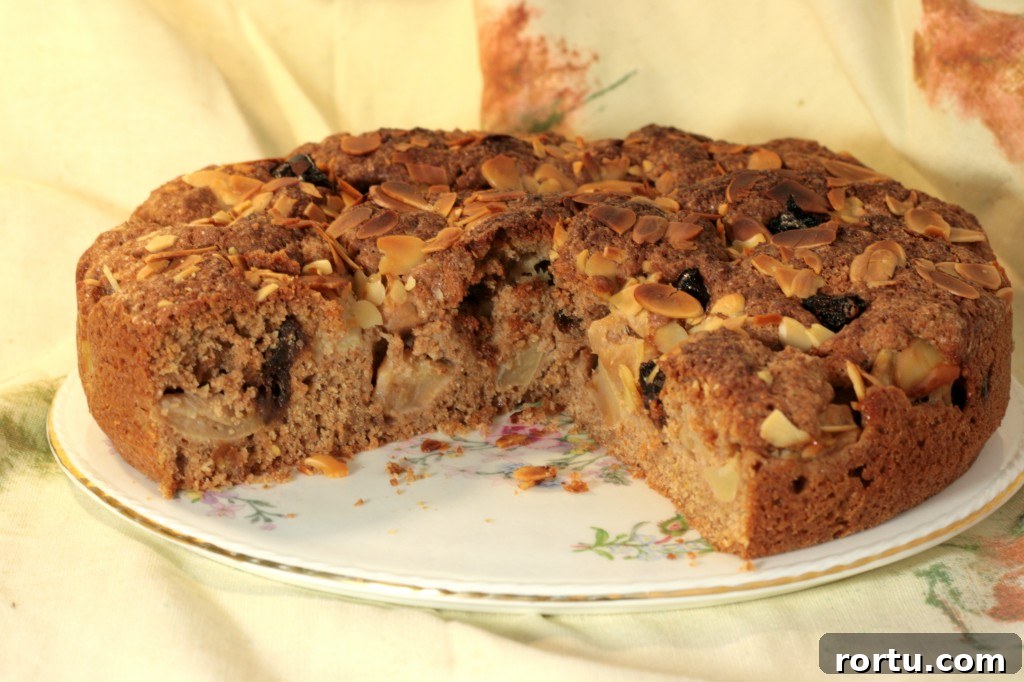
This apple, almond and date cake is deceptively simple yet deeply satisfying. It develops a crisp, caramelised top while the interior stays moist and tender. Spicy, slightly tart apple pieces play against rich, toffee-like roasted dates, and the spelt flour with ground almonds gives the cake a pleasantly nutty, substantial texture.
Serve it warm straight from the oven for a comforting treat, or cool and enjoy it later—some of us even like it for breakfast. The recipe comes from my mother-in-law’s German apple-almond cake, which I’ve adapted slightly to include dates and a touch of spice.
Welsh-German Apple & Almond Cake
You’ll need a 28 cm springform tin or a similar cake tin lined with greaseproof paper. Preheat the oven to 160°C and position a shelf in the middle.
Ingredients
225 g butter, melted
4 tsp baking powder
350 g wholemeal spelt flour (or swap for plain white flour or a mix)
1 tbsp ground cinnamon
1 tsp ground cardamom (adjust to taste)
225 g caster sugar (golden caster works well)
3 medium eggs
1½ tsp almond essence
500 g apples, peeled, cored and cut into roughly 2 cm chunks
100 g dates, chopped into bite-sized pieces
50 g flaked almonds
Method
Prepare the apple pieces first and place them in acidulated water (water with a little lemon juice) to prevent browning while you assemble the rest.
Melt the butter in a small pan or in a microwave-safe bowl and let it cool slightly.
Sieve the baking powder, flour, cinnamon, cardamom and sugar into a large mixing bowl.
Beat the eggs in a separate bowl, stir in the almond essence, then pour the egg mixture and the cooled melted butter into the dry ingredients. Mix until smooth and well combined.
Spoon just over half of the batter into the prepared tin and spread it evenly.
Scatter the drained apple pieces and the chopped dates evenly over the batter.
Dollop the remaining batter over the fruit in large spoonfuls. Leaving some fruit exposed helps it caramelise during baking.
Sprinkle the flaked almonds over the top.
Bake for approximately 1½ hours, or until the surface is golden brown, crisp and beginning to pull away from the sides of the tin. A skewer inserted into the cake’s centre should come out mostly clean with a few moist crumbs from the fruit.
Remove the cake from the oven, release the springform and peel away the paper. If serving warm, place the cake on a serving plate; otherwise transfer it to a cooling rack to come to room temperature.
This cake is delicious on its own or served with crème fraîche, a dollop of thick yogurt or warm custard.
If you try this recipe, please share how it turned out—variations and feedback are always welcome.
Reader variations
Readers have enjoyed adapting the basic recipe in different ways. One baker added cranberries, figs and apricots and finished the cake with a dusting of icing sugar. Others have made it for celebrations and reported that the first cake sometimes disappears in under an hour. These small changes—extra dried fruit, a sprinkle of sugar or a different nut—work well while keeping the core texture and flavour intact.