Once a ubiquitous pub offering around the UK, the ploughman’s lunch has become less common in recent years. Traditionally composed of crusty bread, a hearty slice of proper cheddar, some ham, a tangy pickle, apple and raw onions, it was often enjoyed with a pint. Changes in lunchtime habits, the rise of the sandwich, and a growing appetite for more elaborate dishes have seen this simple British classic fade from everyday menus, but its straightforward flavours still appeal for casual gatherings and parties.
The term “ploughman’s lunch” was popularised by the Milk Marketing Board in the 1960s to help boost cheese sales, though the concept predates that marketing campaign and was once referred to as a “plough-boy’s lunch.” The “pickle” served with a ploughman’s is not simply gherkins; it’s a vegetable relish or chutney made from ingredients such as cauliflower, carrots, onions, gherkins and swede, in a spiced vinegar-and-sugar sauce with additions like apple, tomato or dates. One of the best-known commercial varieties in the UK is Branston Pickle, which many people recognise for its sweet, tangy, textured profile.
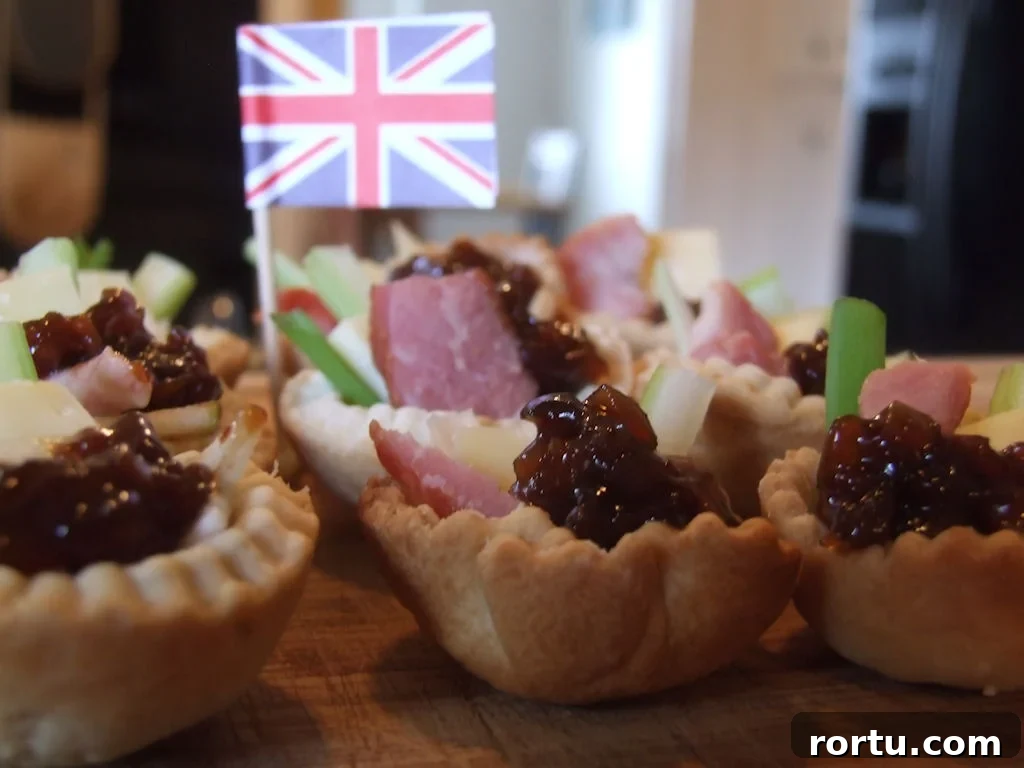
For a Diamond Jubilee party I deconstructed the ploughman’s and rebuilt it as an elegant hors d’oeuvre. Small pastry cases make excellent miniature vehicles for the same combination of flavours—bread replaced by crisp pastry, cheese and ham kept in bite-sized strips, and a small spoonful of pickle to finish. If you can’t find ready pastry cases, it’s simple to make your own. Use a reliable shortcrust or empanada-style pastry, roll it thin, cut 2” (5 cm) circles, and press them into a 2” (5 cm) muffin tray. Blind-bake or bake the shells at 200°C (400°F) for about 12–15 minutes until golden. Crisp, shallow cases work best so the filling doesn’t overwhelm the pastry.
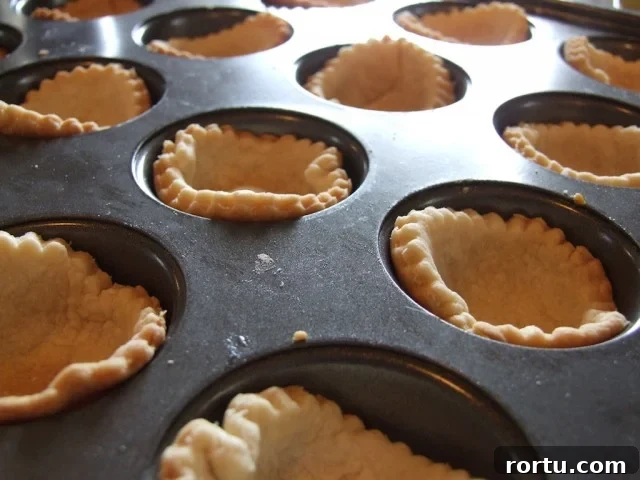
Pastry Cases
Transforming the ploughman’s into a canapé keeps the familiar contrast of textures and tastes: crunchy pastry, salty ham, creamy cheddar, crisp apple and the vinegary counterpoint of pickle. This format is ideal for parties where guests want something familiar but presented with a little refinement. You can also adapt the idea to suit dietary needs: use smoked or roasted vegetables instead of ham for a vegetarian option, choose sharper or milder cheeses according to taste, or offer wholegrain mustard or chutney alternatives to the classic pickle.
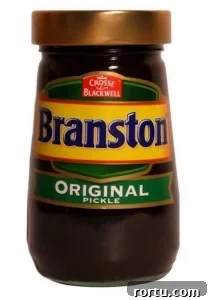
Branston Pickle
Ingredients
- 2” (5 cm) pastry cases
- Cooked ham, thinly sliced
- Celery, trimmed
- Green onion (spring onion)
- Cheddar cheese, proper mature cheddar where possible
- Granny Smith apple (or another tart apple)
- Fresh lemon juice
- Mayonnaise, a small amount
- Branston Pickle or a similar vegetable chutney
Method
Prepare all fillings before assembling. Cut the ham, celery, spring onion, cheddar and apple into strips roughly 1.5” (4 cm) long and about 0.5” (1 cm) wide so they fit neatly into the pastry cases. To stop the apple from browning, toss the strips briefly in a little lemon juice and drain.
Spoon a small amount of mayonnaise into each pastry case—this acts as a glue to hold the pieces together and adds a touch of creaminess. Arrange the ham, celery, spring onion, cheddar and apple vertically into the mayonnaise so the colours and textures are visible. Finish each case with a small dollop of pickle for sweetness and acidity; a little goes a long way, as the pickle is quite bold.
Serve the mini ploughman’s warm or at room temperature. They pair nicely with a cold beer, a sparkling wine or a refreshing soft drink for non-drinkers. For buffet presentation, place the pastry cases on a platter lined with fresh leaves or a rustic wooden board and offer napkins or small plates so guests can enjoy these bite-sized versions of a classic British favourite.
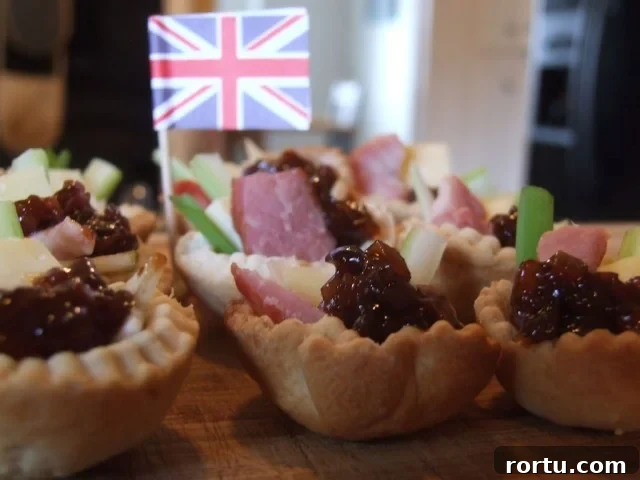
Mini ploughman’s