When I was in middle school, my Italian teacher asked us to create a self-analysis booklet with photographs, drawings and short sentences describing who we were. To help us reflect, she suggested a few prompts, including: which is your favorite room in the house. My answer was the pantry.
Even then the pantry felt like the heart of the home, alongside the kitchen. I love spending time there, scanning rows of jam jars, preserves and tins of tomatoes on the shelves. Watching them fill up during the summer and replace the empty jars gave me a quiet sense of continuity — a reassuring cycle that repeated each year.
As a child I found calm in the dim pantry, whether it was the familiar room of our home or the mysterious storage spaces at my grandparents’ houses. There was always the chance of an exciting find — a can of peaches in syrup tucked behind bottles of tomato sauce, or a forgotten jar of mushrooms in oil — small reminders of autumn kept safe for later.
Now that it’s August, the season for preserving is in full swing. With the other women of Italian Table Talk we decided to focus on summer preserves. Among their contributions were Emiko’s tomato jam inspired by Pellegrino Artusi, Valeria’s aubergine sauce and Jasmine’s gherkins in vinegar. My grandmother used to say that summer meant making the preserve — tomato purée that needed no more explanation. Families would bottle purée, pomarola and peeled tomatoes for winter, a process that involved everyone: filling jars, discarding skins to the chickens, and inevitably splashing tomato everywhere.
In the past, jams were simply called jams, without the distinctions we make today about sugar levels or fruit balance. The important thing was to add enough sugar to preserve the fruit through the winter, turning summer’s bounty into a concentrated source of calories and a welcome afternoon treat for the children.
Grandma loved green tomato jam above all, followed by plum and peach. Blackberry jam was not common until her aunt Antonietta from Todi introduced it — along with a Christmas tree — when she came to visit. The jam my grandmother remembered most fondly was made from figs and uva fragola (a sweet, pinkish grape often translated as “strawberry grape”). I never saw that vine; it was cut down before I was born, but everyone said it climbed up beside the door and over the terrace. That jam was stored in large jars and kept hidden. At the time the kitchen was shared by several related families, and each woman guarded her preserves carefully, sometimes tucked away in a bedroom drawer so her children would have a snack later.
Vegetables were eaten in season, following nature’s rhythm. Only mushrooms (when found) and artichokes were preserved in oil. Ripe black olives were harvested, sun-dried or heated gently, then kept in salt for winter. Those dried black olives were a simple mangiare — a quick bite of bread and olives when there wasn’t time for a full meal.
After my grandmother married my grandfather and embraced Southern traditions, she learned from Aunt Valeria to flavor dried black olives with garlic and orange peel. My sister and I adore the bittersweet combination of olive and citrus, whether eaten on its own or stirred into pasta with tomato sauce. Green olives, following Southern custom, were stoned, soaked in water for a week, then preserved in oil with fennel.
Beyond jars, there was also a strong tradition of drying summer produce in the sun or in the oven. Figs, for example, were sun-dried on oval handmade willow racks — some of which still remain in our cellar — sometimes with an almond tucked inside.
Tiny tomatoes, called a buccola in our dialect, were picked as they began to blush. They were strung together and hung in the cool, dark shed to ripen slowly. In winter those slightly withered cherry tomatoes were prized additions to ribollita or a beef-and-vegetable broth. I still picture their plump braid hanging high on the shed wall, safe from cats and mice.
Garlic and onions were braided and stored in the same shed, potatoes went into the dark attic, and pumpkins were harvested at season’s end and kept whole, sliced as needed for omelets and stews.
In San Gimignano my grandfather Remigio preserved capers in salt or vinegar. Capers grew wild on the city walls, so he would pick a handful whenever he passed a sunny corner and bring them home for winter use. Those capers were crisp, tart and full of flavor, nothing like the mass-produced ones you buy today. A slice of bread with butter and a thin caper felt like a complete, happy snack. He also grew white melons in his small garden and turned them into a honey-scented jam.
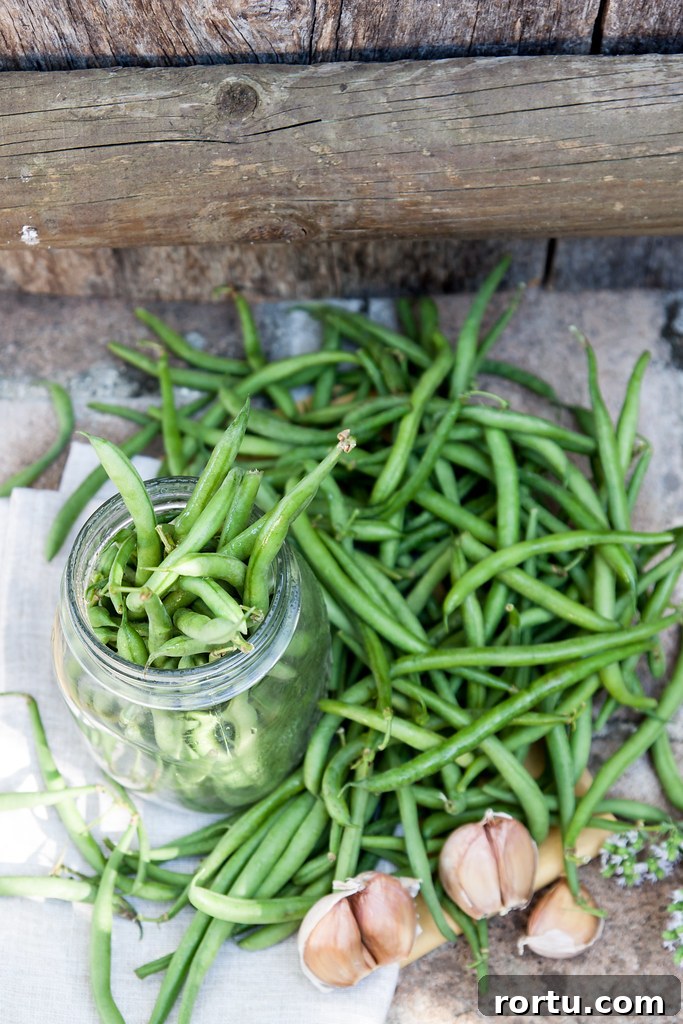
Over the years our pantry has grown. My mother makes huge amounts of jam every summer — blackberries, plums and peaches are regulars. Among the vegetables we bottle tomatoes, pomarola with fresh herbs, little peppers stuffed with tuna and French beans in oil.
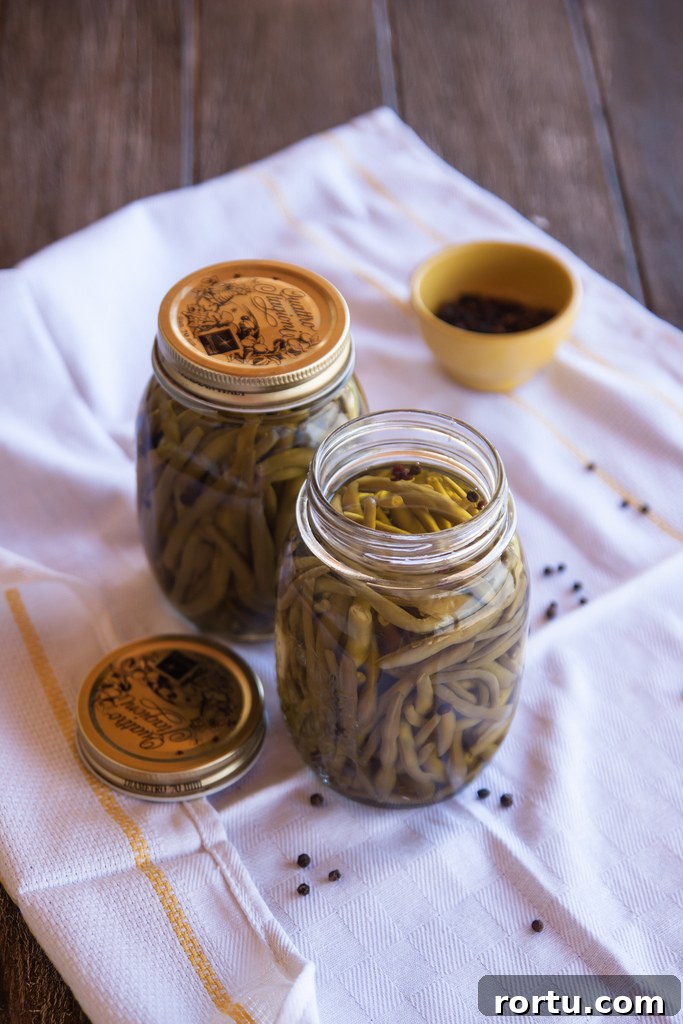
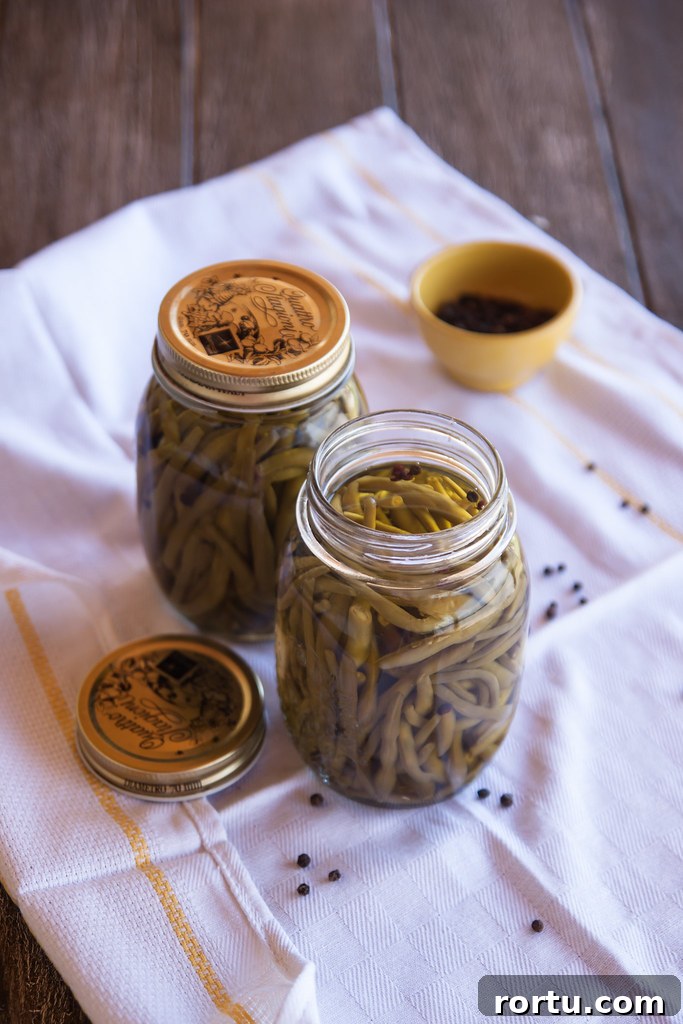
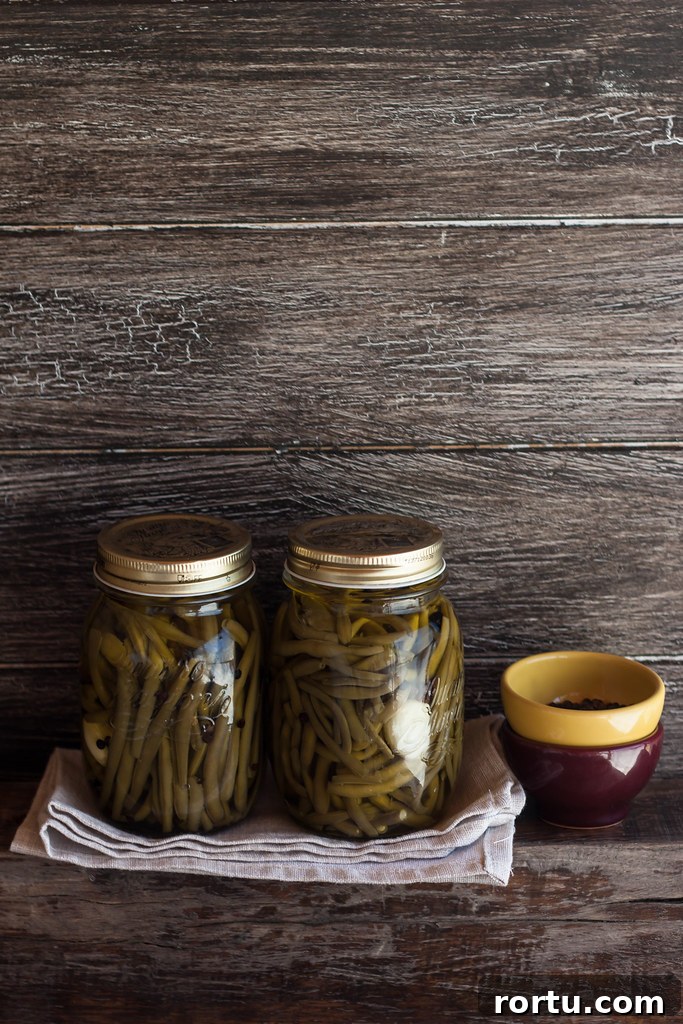
French beans preserved in oil, with a clove of garlic, black peppercorns and bay leaves, are one of my favorite winter preserves. Because they are briefly cooked in water and vinegar, they remain crisp and slightly al dente. They help lift the flavor of boiled meat or serve as a tangy side to a fluffy cheese omelet, offering a pleasant contrast of texture and taste.
French beans preserved in oil
Giulia
Ingredients
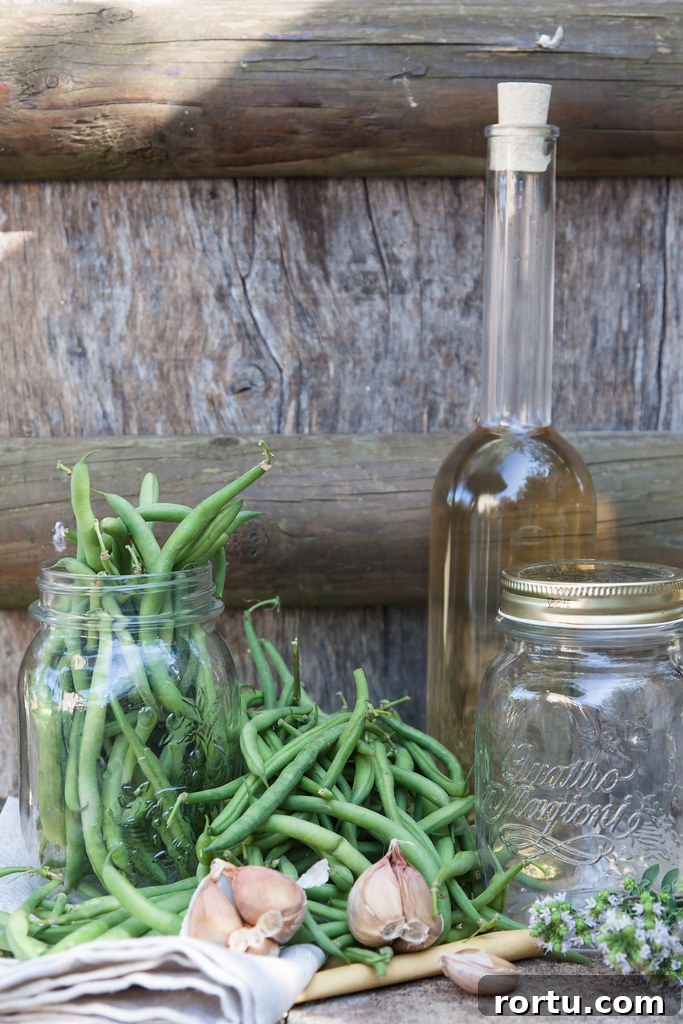
- 800 g fresh French beans
- 1.5 l water
- 500 ml white wine vinegar
- coarse salt
- extra virgin olive oil or organic seed oil
- garlic cloves
- black peppercorns
- bay leaves
Instructions
-
Clean the French beans: break off the tips and pull the seam to remove any tough fiber.
-
Fill a pot with the water and white wine vinegar, add a few teaspoons of coarse salt and bring to a boil. Add the beans.
-
Cook for about 20 minutes until tender but still al dente.
-
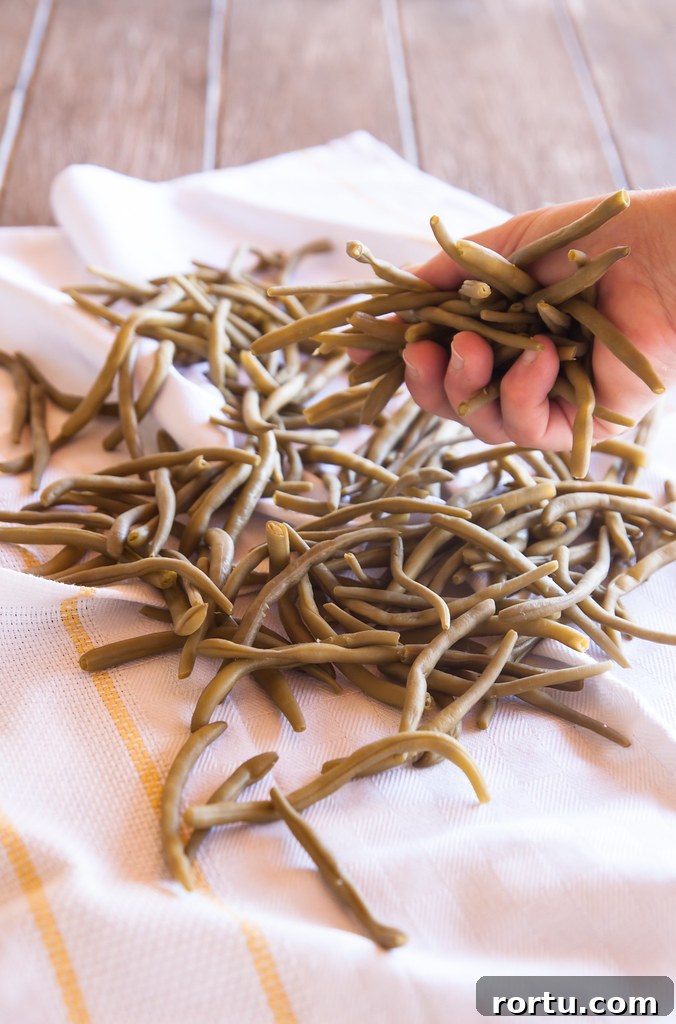
Drain and rinse the beans under cold water to stop cooking. Spread them on a towel and dry thoroughly before packing.
-
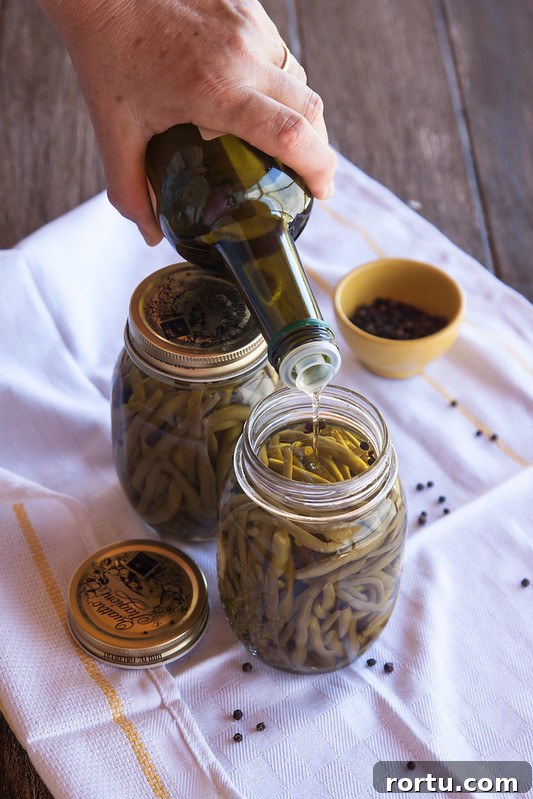
Pack the beans standing in a sterilized glass jar. Add a few garlic cloves, one or two bay leaves and a teaspoon of black peppercorns.
-
Cover completely with olive oil, making sure the beans are submerged.
-
Seal the jar and store in a cool, dry place — the pantry is ideal. Let the beans rest for at least a month before eating.
Link Love
- How to sterilise jars. A helpful video resource for safe preserving.
- Vegetable preserves: tomato preserve and pomarola from previous seasons offer classic examples of summer bottling.
- Fruit preserves: apricots, blackberries and other summer fruits make unbeatable jams.
- A practical tip I find intriguing: freezing herbs in olive oil is an easy way to preserve fresh herbs through the year.
Let’s get social
To follow the Italian Table Talk posts and recipes, you can find the group across a few social accounts maintained by the contributors:
- Emiko — active online with personal blog and social accounts.
- Valeria — shares recipes and photos through her blog and social channels.
- Jasmine — posts recipes and tips on her blog and social pages.
- Juls — maintains a blog and social profiles where she shares seasonal stories and recipes.
Follow the conversation on Twitter with the hashtag #ITabletalk to join in and share your preserves and pantry stories.