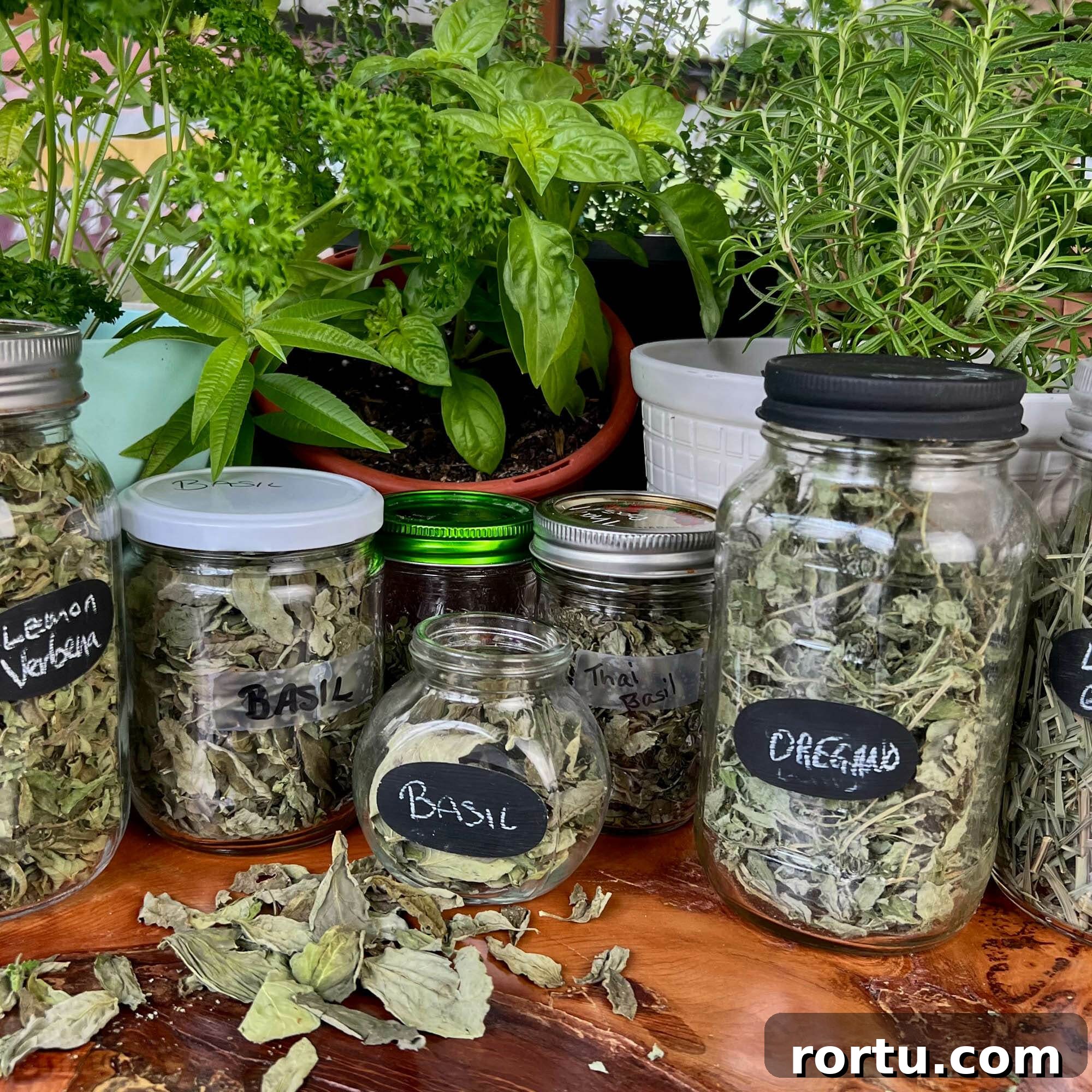
Knowing how to store dried herbs correctly preserves their flavour and extends their useful life. I love cooking with fresh and dried herbs because they can transform a dish from ordinary to remarkable. While all dried herbs will eventually lose their essential oils, careful storage slows that process and keeps aromas bright for as long as possible.
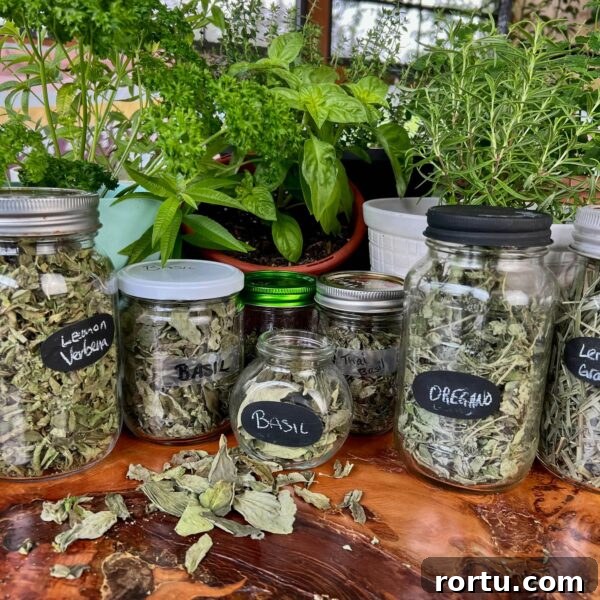
Also try: Homemade Seasoning Blends, Homemade Finishing Salts, Infused Vinegar, Infused Simple Syrup.
Top 6 Tips for Storing Dried Herbs
1. Understand what causes dried herbs to lose flavour.
Knowing the main threats to dried herbs helps you set up storage that protects them.
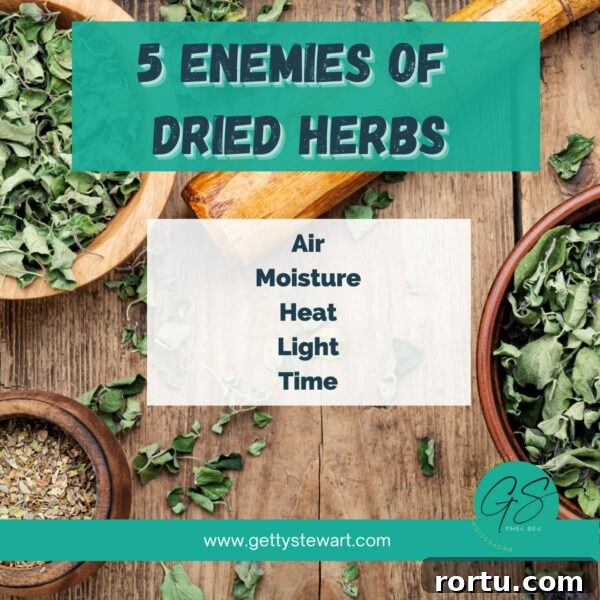
The 5 Enemies of Dried Herbs are...
- Air – oxygen breaks down essential oils, so keep herbs whole and airtight.
- Moisture – low humidity prevents mold; avoid any exposure to dampness.
- Heat – cool storage preserves flavour longer.
- Light – especially sunlight, which fades colour and aroma.
- Time – even with ideal storage, potency declines over time.
Pro Tip: Test dried herbs by crushing a leaf in your palm. A strong aroma means they’re still potent. A faint scent suggests they’re weakening and you may need to use more than a recipe calls for. No aroma or a stale dried-green smell means it’s time to replace them.
2. Store in Airtight Containers
Glass jars with tight-sealing lids are ideal because they keep air and moisture out. Metal or high-quality plastic containers that seal well also work. Avoid flimsy plastic bags — they can develop tiny holes or lose their seal. Paper bags are fine for drying herbs but not for long-term storage because they allow humidity to fluctuate.
3. Store Whole Leaves, Not Crushed
Essential oils are held inside tiny cells in herb leaves. Crushing leaves breaks those cells and exposes oils to oxygen, causing aroma and flavour to dissipate. Store leaves whole and crumble them just before adding to food to keep more flavour in the herb rather than in the air.
Store whole leaves in appropriately sized containers and crumble only when you cook.
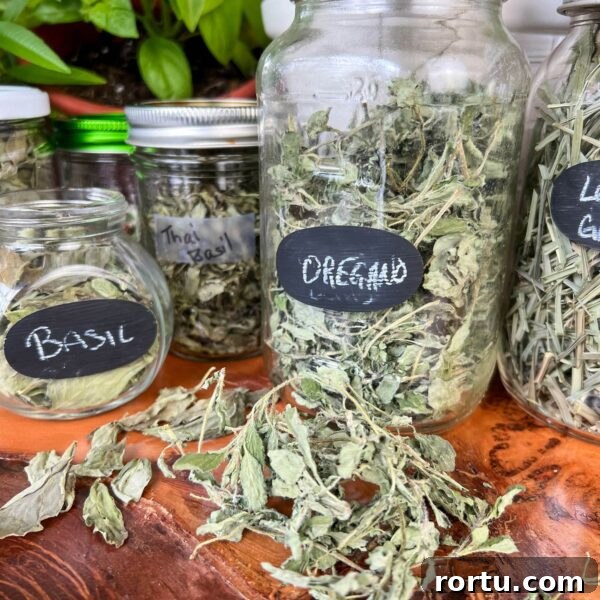
4. Use the Right Sized Container
Choose a jar or container that closely matches the volume of herbs you’re storing so there’s minimal empty space. Less air in the container means the herbs stay fresher. Vacuum sealing is helpful for long-term storage but not required if you use an appropriately sized airtight jar.
5. Keep out of Direct Light
Store jars in a dark cupboard or pantry. Decorative jars displayed in bright kitchen light look nice, but exposure to light — especially sunlight — will speed flavour loss.
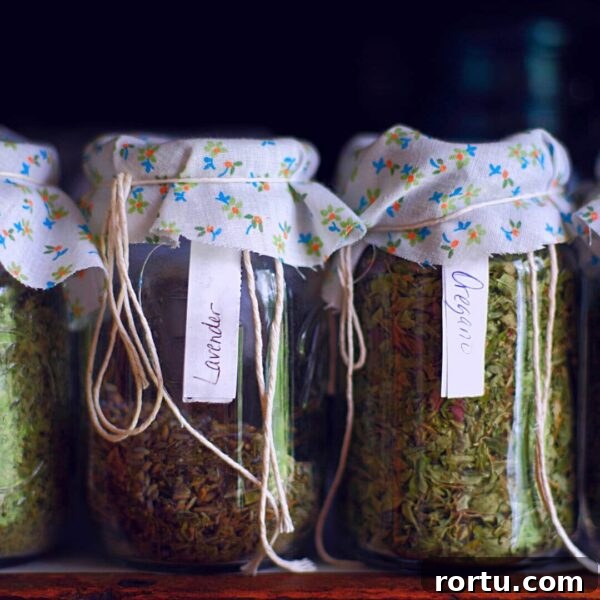
6. Keep Dried Herbs in a Cool Place
Avoid storing herbs next to the stove or in areas with frequent temperature changes. Heat accelerates the loss of essential oils. A cool, dry pantry is best.
Reality check: If your kitchen layout places a spice cupboard near the stove, consider keeping a large reserve of whole-leaf herbs in a cool, dark pantry and a small daily-use jar in the kitchen. Refill the small jar from the reserve as needed — it’s a simple extra step that preserves overall potency.
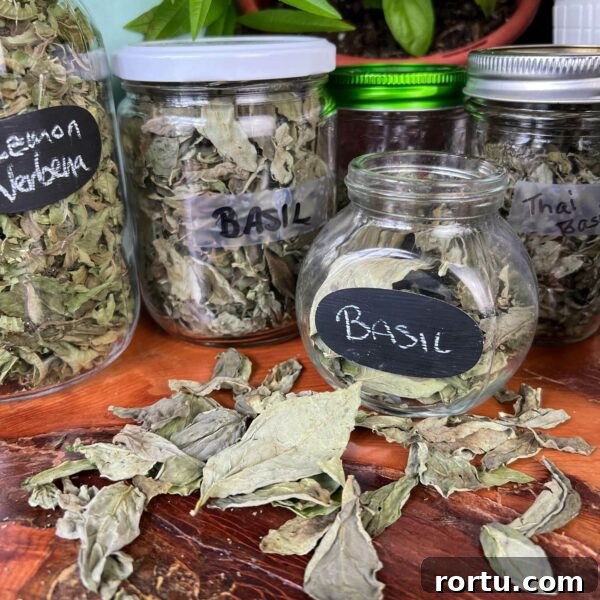
Can I Store Dried Herbs in the Freezer?
Yes. A consistent cold environment preserves dried herbs well. Take care when moving herbs from freezer to room temperature to prevent condensation. Work quickly: remove the amount you need and return the remainder to the freezer promptly to avoid moisture exposure.
How Long Do Dried Herbs Last?
Shelf life varies by herb. Most dried herbs remain useful for 8 to 12 months. With optimal storage some, like rosemary, sage and thyme, can retain flavour for up to three years. More delicate herbs — such as dill, parsley, cilantro and chives — lose flavour faster and often freeze better than they dry.
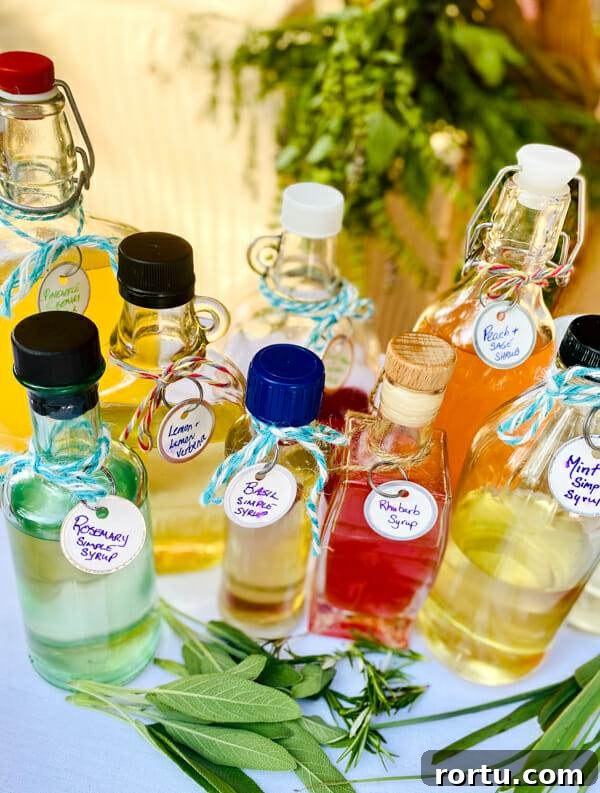
Certain herbs, including lemon balm, tarragon and some specialty mints, don’t preserve well when dried or frozen. Use these fresh during their season or preserve them by making herb butter, infused vinegar or simple syrup for cocktails and drinks.
Which Drying Method is Best?
Dehydrator, oven, microwave or air drying can all work if done correctly. Microwaving and oven drying are fast but risk overheating and damaging essential oils if done at too high a temperature. Dehydrators are controlled and reliable, though they use electricity and take time. Air drying is simple, low-cost and effective in dry climates. Choose the method that fits your herb type, climate and available equipment.
- Chives
- Mint
- Parsley
- Basil
- Oregano
- Lemon Balm
- Dill
- Rosemary
- Green Onions
- Chamomile
Match the drying approach to each herb for best results: low, steady heat or gentle air drying preserves oils better than high, fast heat.
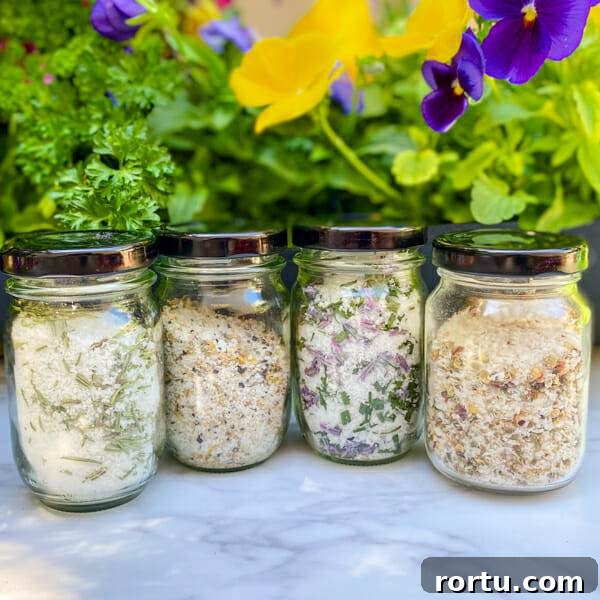
What are Other Ways to Preserve Herbs?
- Herb butter – great for chives, tarragon, oregano and parsley.
- Infused vinegar – try chive blossoms, oregano, tarragon or rosemary.
- Finishing salts – an attractive way to use fragrant herbs.
- Homemade seasoning blends – combine dried herbs and spices into custom mixes.
- Pesto – make pesto with herbs beyond basil to capture fresh flavour.
If you prefer visual guidance, there are many short, focused herb videos that demonstrate drying, harvesting and storage techniques. They’re helpful if you want quick, practical demonstrations.
Getty’s Herb Playlist on YouTube











What herbs are you drying this year? Comment below or share your photos on Instagram @getgettys or Facebook @GettyStewart.HomeEconomist.