Disclosure: This post contains affiliate links. As an Amazon Associate, I earn from qualifying purchases. This means if you click on any Amazon links on my website and make a purchase, I may receive a commission at no additional cost to you. It’s a great way to support my blog, so I can keep sharing delicious recipes with you!
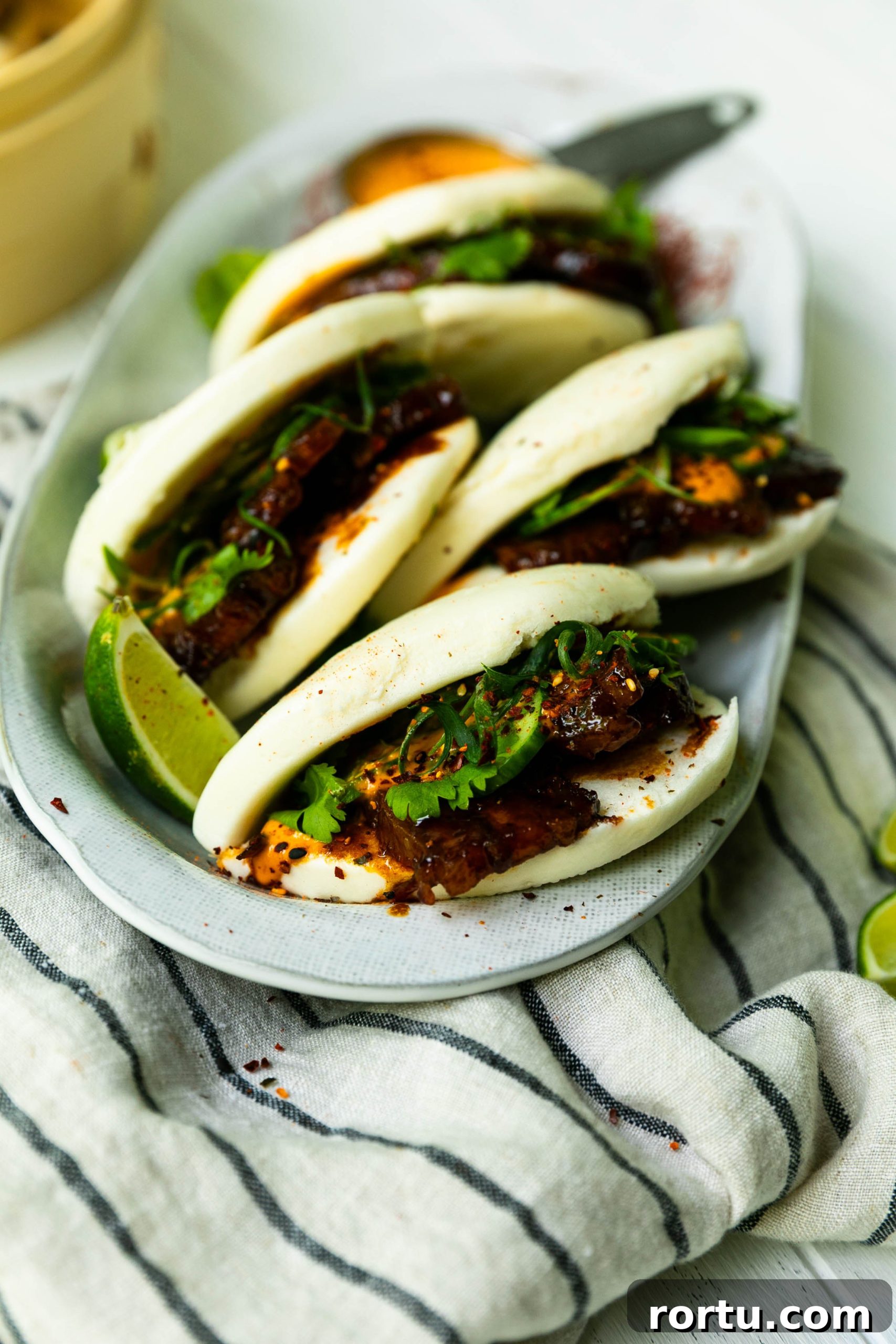
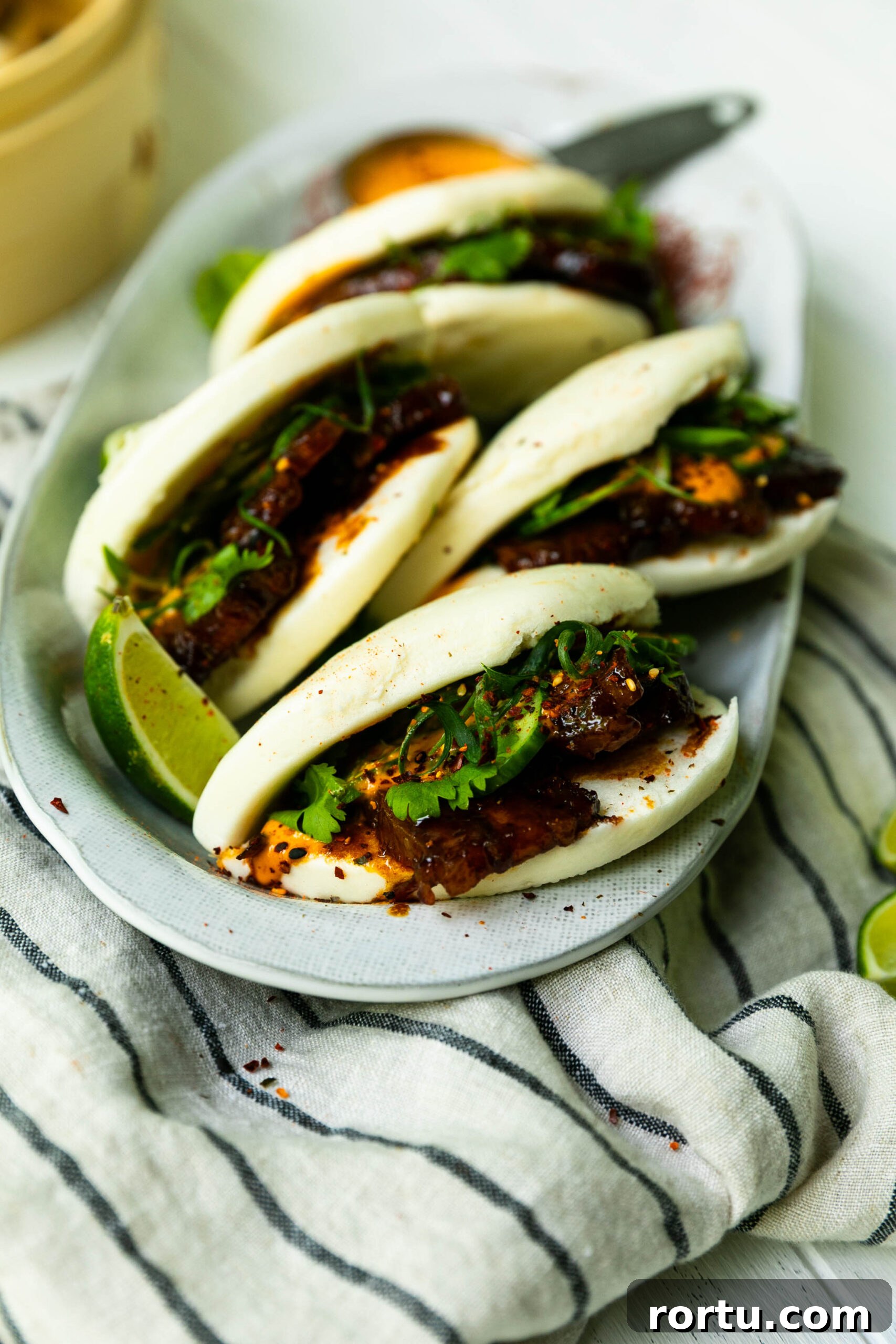
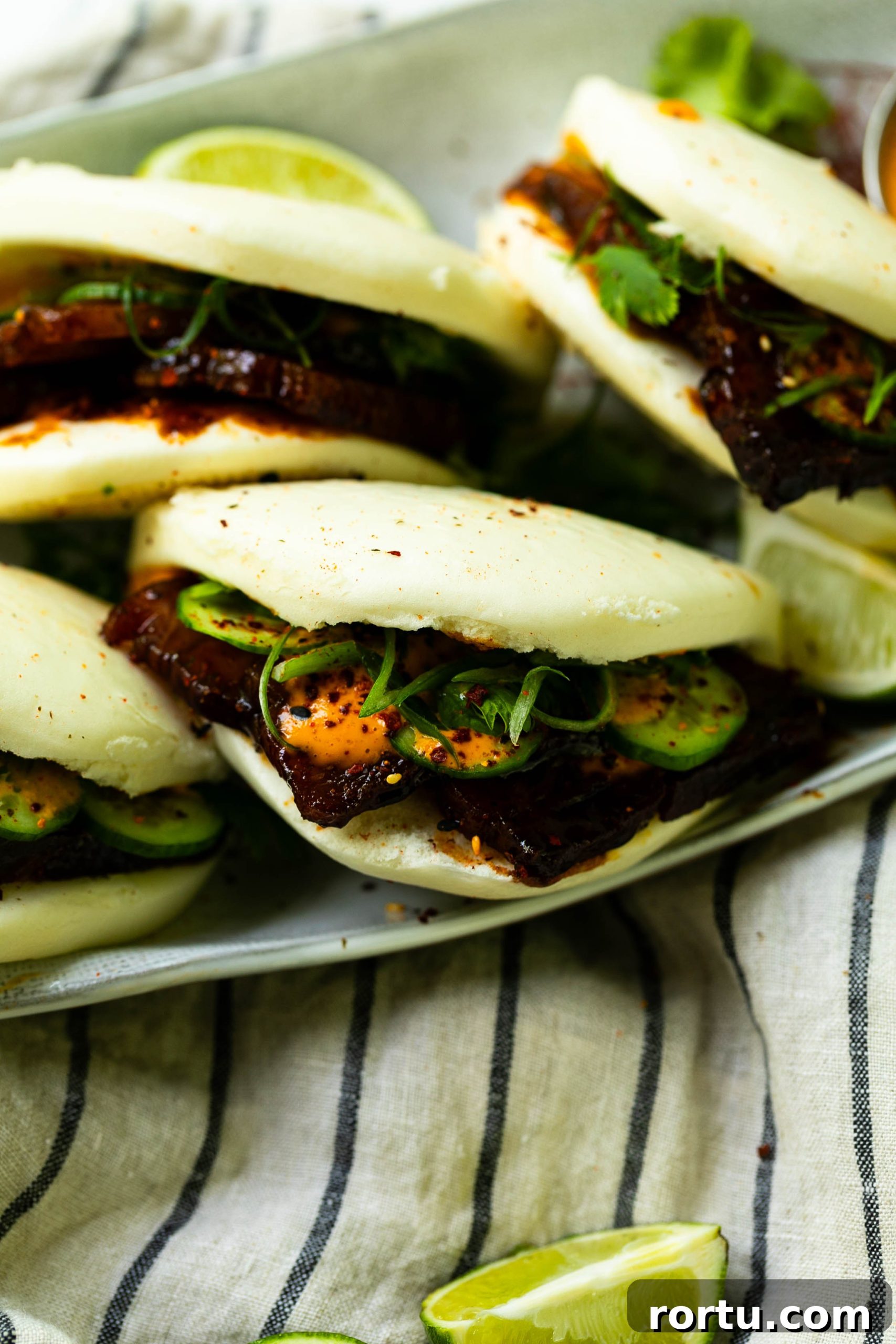
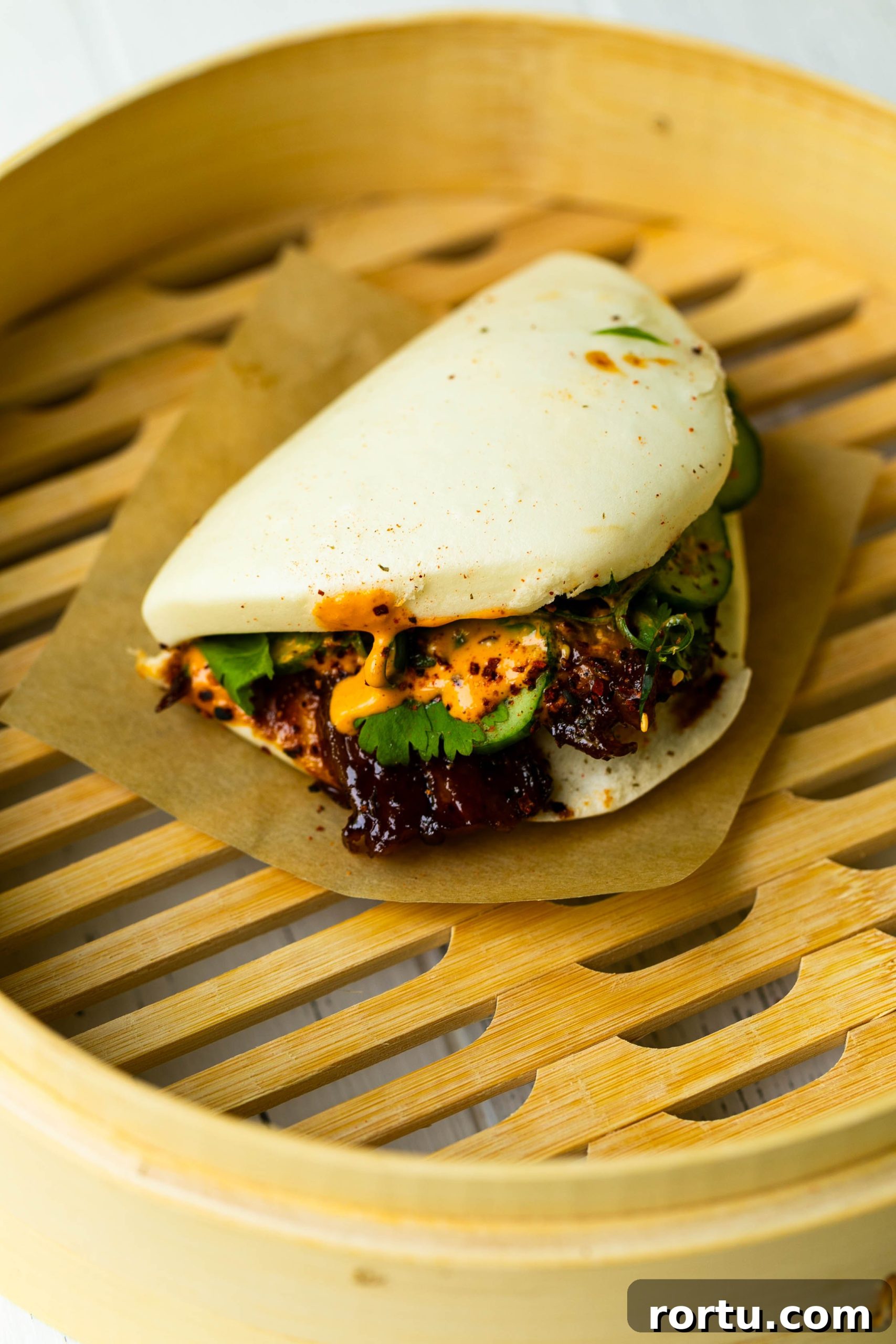
Imagine biting into a soft, pillowy steam bun filled with melt-in-your-mouth pork belly slow-roasted until tender and glazed with a sweet-savory sauce. This glaze blends light soy, mirin, brown sugar and a touch of gochujang for gentle heat and deep umami. Each bite pairs the rich pork with crisp cucumber, bright cilantro, green onions and a tangy kimchi mayo. A sprinkle of shichimi togarashi adds citrusy, nutty, and peppery notes that elevate the overall flavor. These buns are an excellent choice for entertaining or a satisfying weekend cooking project.
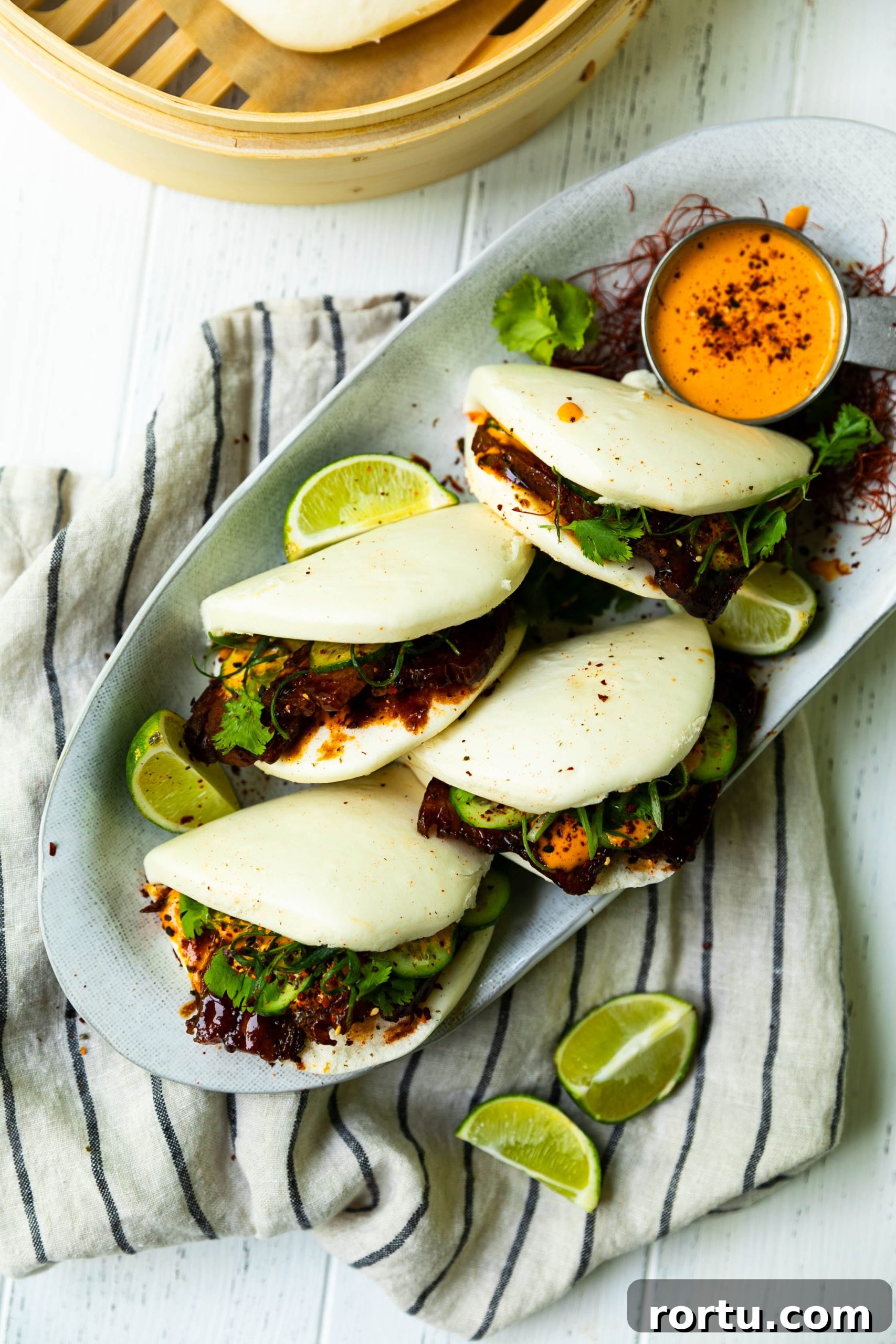
This version is not crispy pork belly but intentionally tender and richly flavored—made to be sliced and enjoyed in steam buns. Inspired by a favorite offering from Hip-Stir in Marion, IA, this recipe recreates that combination of soft buns, succulent pork, fresh cucumber and herbs, red onion and creamy kimchi. The dish weaves together Korean, Japanese and Chinese influences, giving it a dynamic, layered profile.
This is best tackled as a weekend project: plan to start two days ahead and allow several hours for slow roasting. Many of the components improve with a bit of resting time, so the extra planning pays off in flavor and texture.
A Brief History of Steam Buns
Steam buns, or baozi, are a long-standing staple of Chinese cuisine. Traditionally filled with savory meats or vegetables, these soft, cloud-like buns have traveled across cultures and evolved into many regional variations. This recipe pays homage to that tradition while introducing modern Korean and Japanese flavors for a contemporary twist.
The Traditional Steam Bun
Classic bao are prized for their tender dough and balanced fillings. Whether filled with barbecued pork, braised pork, or a vegetarian mix of mushrooms and greens, the beauty of steam buns lies in the contrast between fluffy bread and a flavorful, often saucy interior. The version here follows that spirit but emphasizes slow-roasted pork belly and a tangy, creamy kimchi mayo.
The Recipe
Ingredients
4-pound pork belly (adjust quantity as desired)
Glaze:
- Light soy sauce
- Japanese mirin
- Light or dark brown sugar
- Garlic cloves
- Fresh ginger
- Gochujang
- Water
- Toasted sesame oil
Kimchi Mayo:
- Kewpie mayo
- Kimchi, coarsely chopped
- Gochujang
- Toasted sesame oil
- Sriracha, to taste
To Serve:
- Lotus steam buns (store-bought or homemade)
- Thinly sliced cucumber
- Picked cilantro leaves
- Thinly sliced green onions
- Shichimi togarashi (Japanese seven-spice blend), to sprinkle
- Lime wedges
Shichimi togarashi typically combines chili pepper, citrus peel (orange or yuzu), sesame seeds, Japanese pepper (sansho), seaweed, ginger and poppy seeds. It brings brightness, spice and a little crunch—an ideal finishing spice for these buns.
Equipment
- Plastic cutting board
- Chef’s knife
- Large sheet pan
- Small blender or food processor
- Saucier or small saucepan
- Slicing knife (for thin slices)
- 12″ nonstick skillet
- Tongs or kitchen tweezers
- 10-inch steamer baskets (optional)
Instructions
Step 1: Prep the Pork Belly (Start Two Days Ahead)
Night before cooking: Cut pork belly into roughly 5 x 3-inch pieces. Prick the fat layer with a fork, season generously with kosher salt, wrap and refrigerate overnight. The salt helps season the meat deeply. Wrapping prevents the exterior from drying.
Cooking day: Preheat oven to 275°F. Roast pork for 4–5 hours on a lined sheet pan, until fork-tender. Remove, cool and refrigerate overnight. Chilling makes thin slicing much easier.
Step 2: Make Kimchi Mayo
Blend Kewpie mayo, chopped kimchi, gochujang, toasted sesame oil and a squirt of Sriracha until smooth. Refrigerate—flavors round out with time.
Step 3: Prepare the Glaze
Combine glaze ingredients in a small saucepan and boil until reduced and syrupy, about 12–17 minutes. Cool. The glaze should be slightly thicker than maple syrup; it will thicken further as it cools.
Step 4: Assemble the Steam Buns
Slice the chilled pork into roughly 1/2-inch slices. Toss or brush with glaze and gently warm in a preheated skillet over medium-low heat, adding a little extra glaze if desired. Steam or heat buns according to package instructions. Fill each bun with pork, cucumber, cilantro, green onion and kimchi mayo. Finish with a sprinkle of shichimi togarashi and serve with lime wedges.
Tips and Tricks
- Salt the pork overnight to deepen flavor.
- Low-and-slow roasting ensures fork-tender pork; if it resists, continue to cook and check periodically.
- Chill the pork before slicing for thin, neat cuts.
- Adjust gochujang and Sriracha for your preferred heat level.
- Reduce the glaze to a maple-syrup consistency for best coverage.
- Leftover glazed pork freezes well—freeze slices individually for easy reheating.
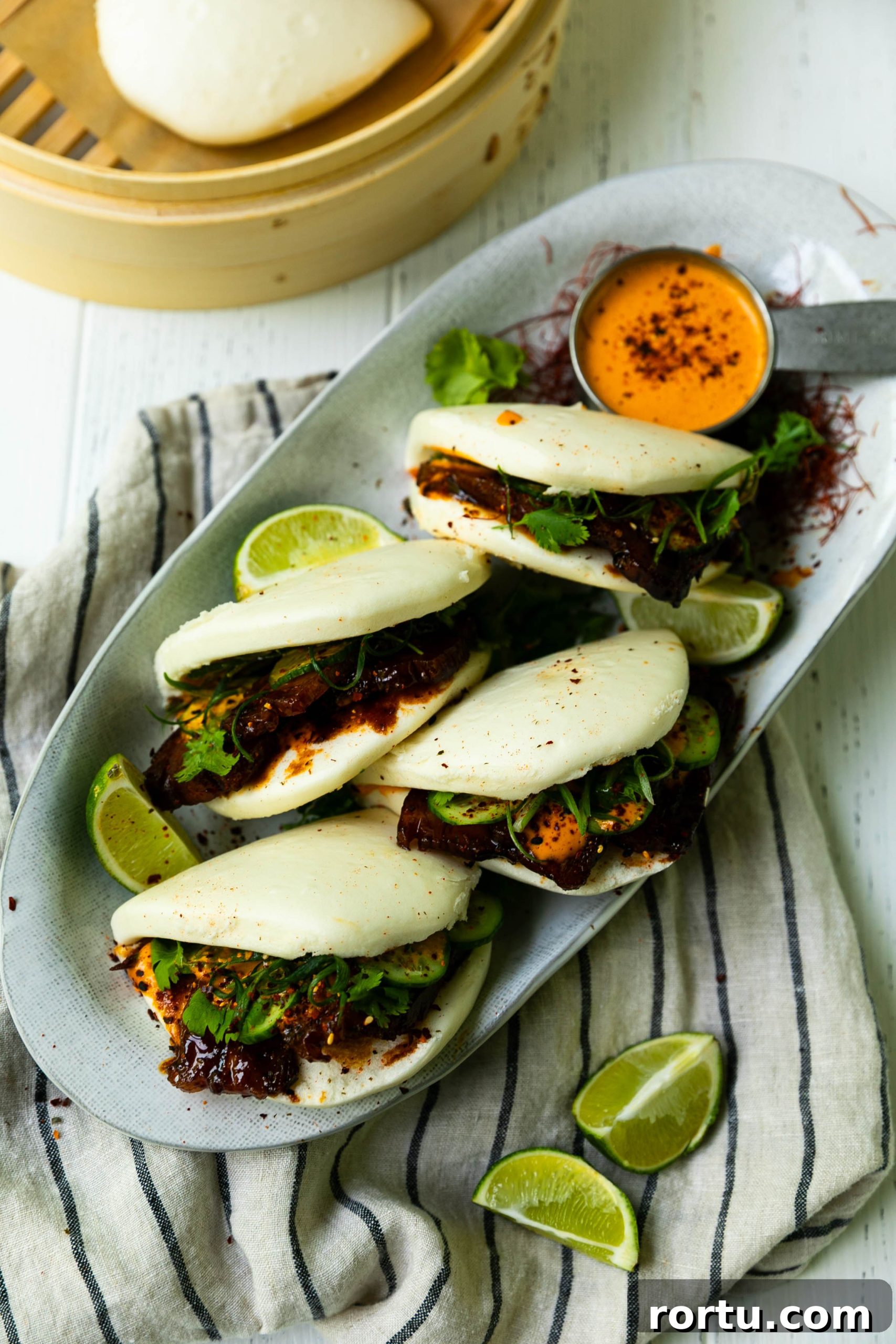
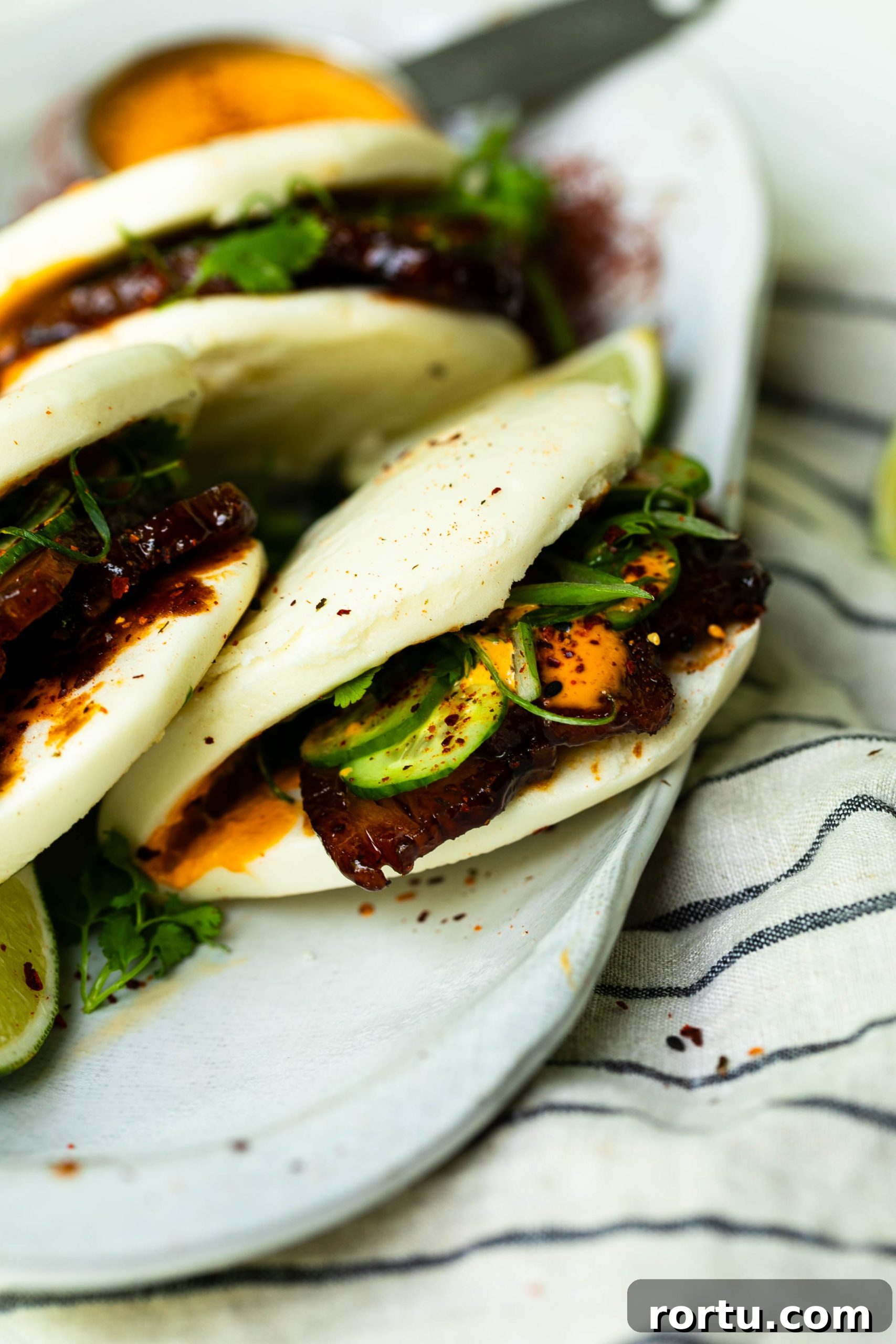
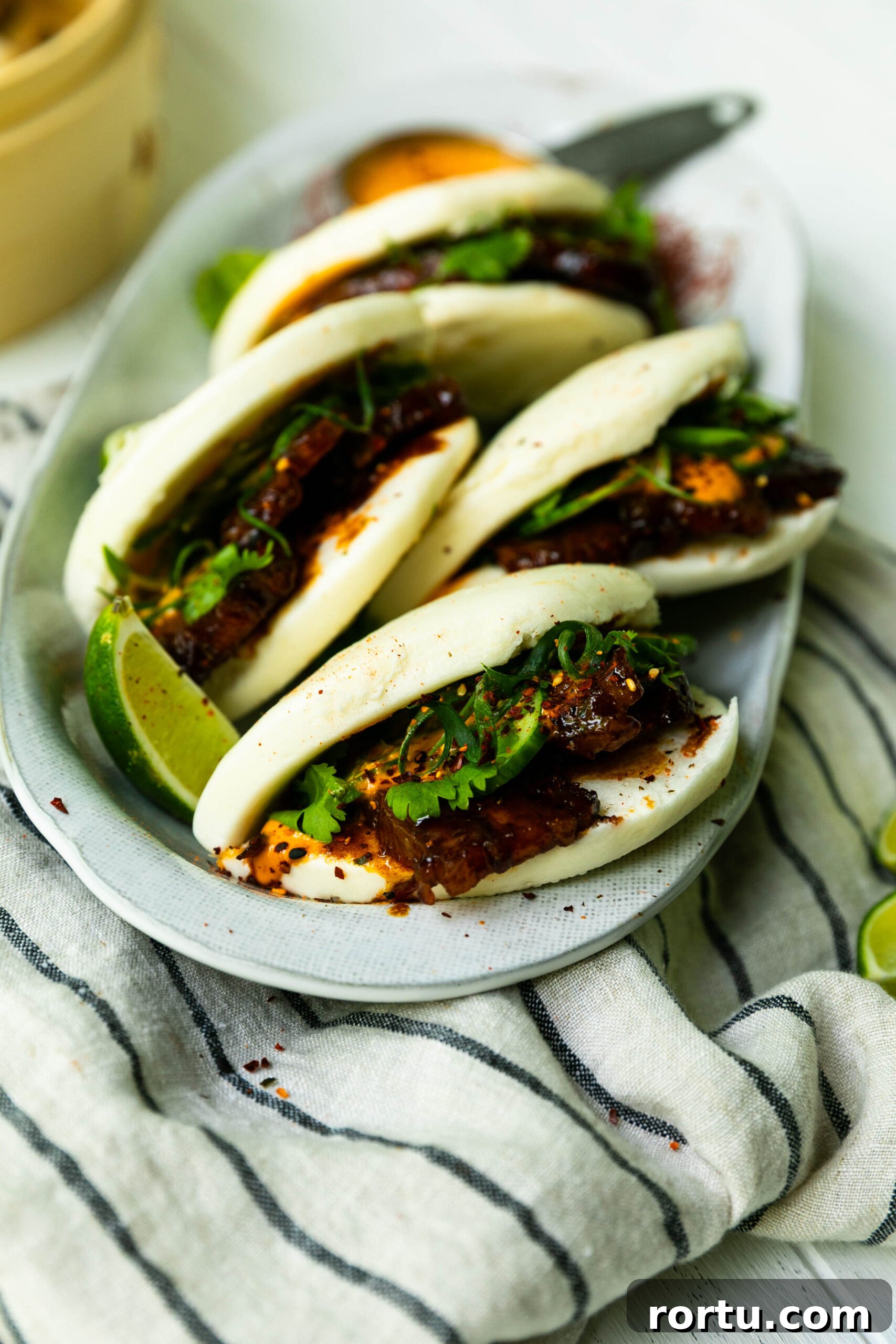
Well done—you’ve prepared Glazed Pork Belly Steam Buns with Kimchi Mayo. This recipe rewards patience with bold, layered flavors and a luxurious texture. It produces ample leftovers, which freeze and reheat nicely, so you can enjoy these savory buns again later. Whether you’re serving guests or indulging at home, this fusion-style dish showcases how traditional techniques and cross-cultural flavors can create something memorable. Happy cooking!
Glazed Pork Belly Steam Buns with Kimchi Mayo
5 Stars 4 Stars 3 Stars 2 Stars 1 Star
No reviews
- Author: Amanda
- Yield: 10 to 12 servings
Description
Discover Glazed Pork Belly Steam Buns with Kimchi Mayo, a weekend project featuring tender slow-roasted pork belly, a sticky soy-gochujang glaze, and creamy kimchi mayo. This Asian-inspired fusion recipe is perfect for sharing or freezing for later.
Please note this recipe is best started two days before serving.
Ingredients
Scale
- 4-pound pork belly
- Kosher salt, to taste
SOY-GOCHUJANG GLAZE:
- 1 cup light soy sauce
- 1/4 cup Japanese mirin
- 1/4 cup light or dark brown sugar
- 10 garlic cloves, peeled and smashed
- 3″ fresh ginger, sliced
- 2–3 tablespoons gochujang, to taste
- 2 tablespoons water
- 1 to 1¼ teaspoons toasted sesame oil
KIMCHI MAYO:
- 1/3 cup Kewpie mayo
- 1/3 cup kimchi, coarsely chopped
- 1 tablespoon gochujang
- 1/4 teaspoon toasted sesame oil
- Squirt of Sriracha, to taste
TO SERVE:
- Lotus steam buns, prepared as directed
- Thinly sliced cucumber
- Picked cilantro leaves
- Thinly sliced green onions
- Shichimi togarashi, to sprinkle
- Lime wedges
Instructions
- Night before cooking: Cut pork into roughly 5 x 3–3.5″ pieces. Prick the fat layer with a fork, season generously with kosher salt, wrap tightly and refrigerate overnight to allow the salt to penetrate.
- Preheat oven to 275°F. Place pork on a lined sheet pan, season lightly, and slow-roast for 4–5 hours or until fork-tender. Cool and refrigerate overnight to firm the meat for easier slicing.
- Make the kimchi mayo while the pork cooks: blend Kewpie mayo, chopped kimchi, gochujang, toasted sesame oil and Sriracha until smooth. Refrigerate; flavors improve with resting.
- Prepare the glaze: combine glaze ingredients in a small saucepan, bring to a boil and reduce until syrupy, about 12–17 minutes. Cool. The glaze should coat the back of a spoon.
- Prep vegetables and heat the buns according to package directions.
- Slice chilled pork about 1/2″ thick. Coat slices in glaze and gently warm in a preheated nonstick skillet over medium-low heat. Assemble buns with pork, cucumber, cilantro, green onion and kimchi mayo. Sprinkle with shichimi togarashi and serve with lime wedges.
Equipment
10-inch steamer baskets
10.25-inch slicing knife
12″ nonstick skillet
3-quart stainless-steel saucier
Chef’s knife
Gochujang
Kewpie mayo
Kitchen tweezer set
Large sheet pan
Mirin
Plastic cutting board
Small blender
Notes
For best results, start this recipe two days before serving. If short on time, you can skip the overnight salting step, but flavor and texture will be improved with the full timeline.
- Category: Pork, Asian-Inspired