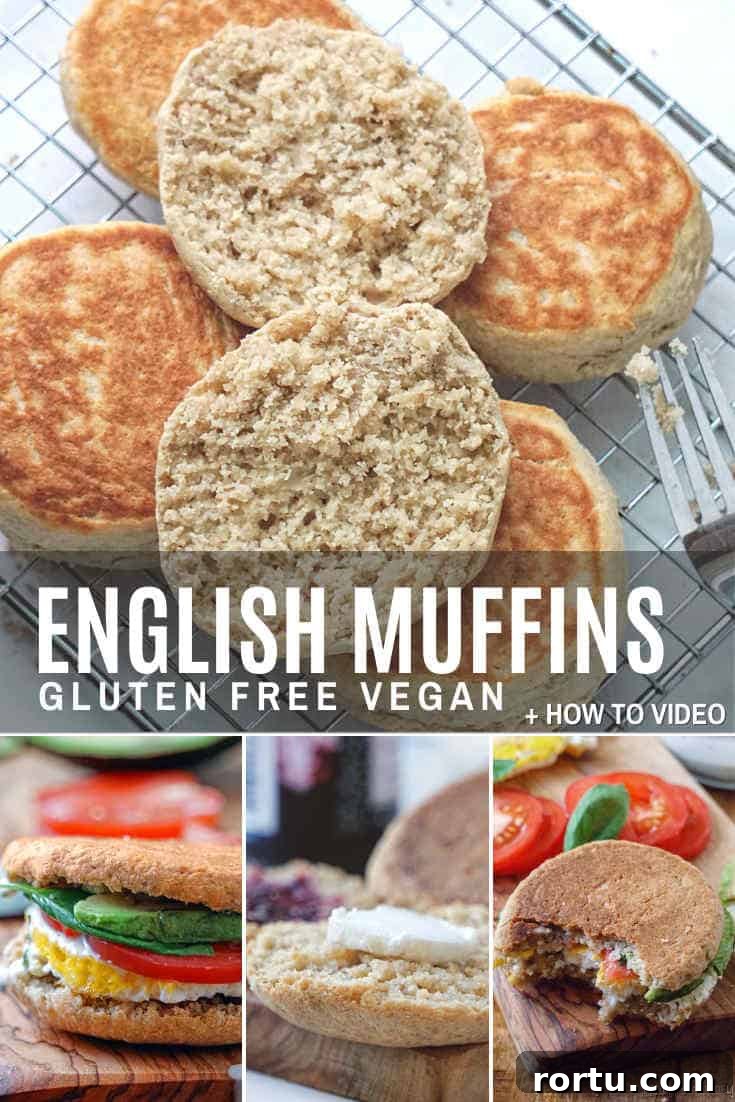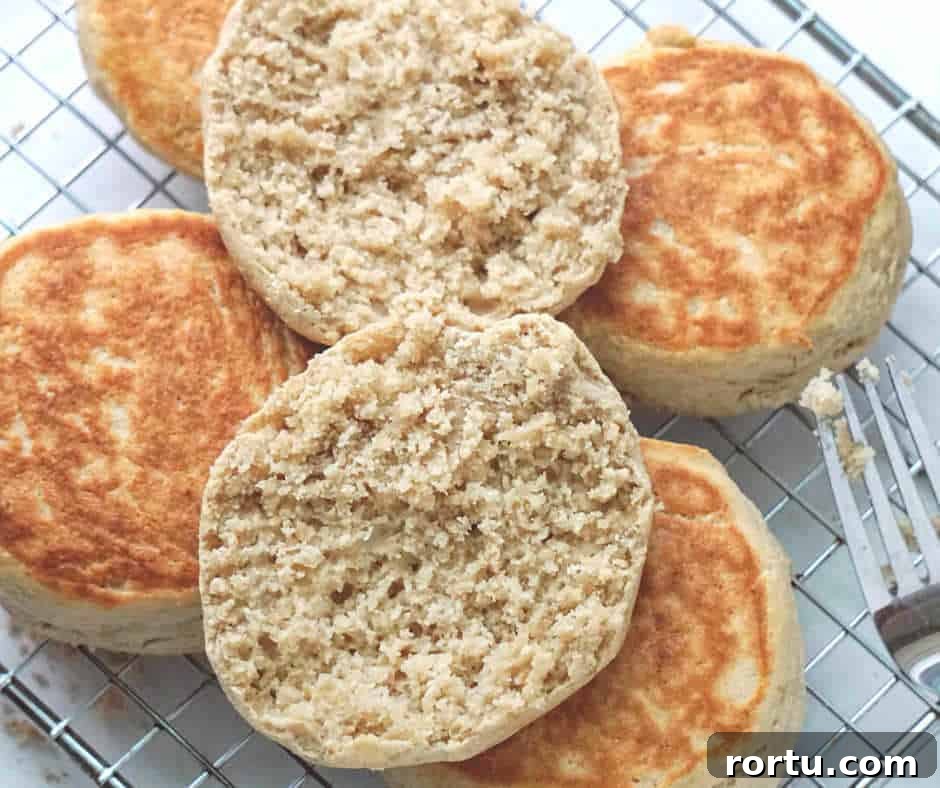
These gluten-free sourdough English muffins are vegan, dairy-free, and made without commercial yeast. Cooked on a skillet for a nicely browned exterior, then finished in the oven so the centers set through — no rings, no kneading. If your starter is active, they’re ready in about 30 minutes.
Quick Overview
- Texture: crisp browned outside, soft inside
- Flavor: mild sour tang (more pronounced if you let the dough sit 1–2 hours)
- No rings needed: shape with greased hands and press on the skillet
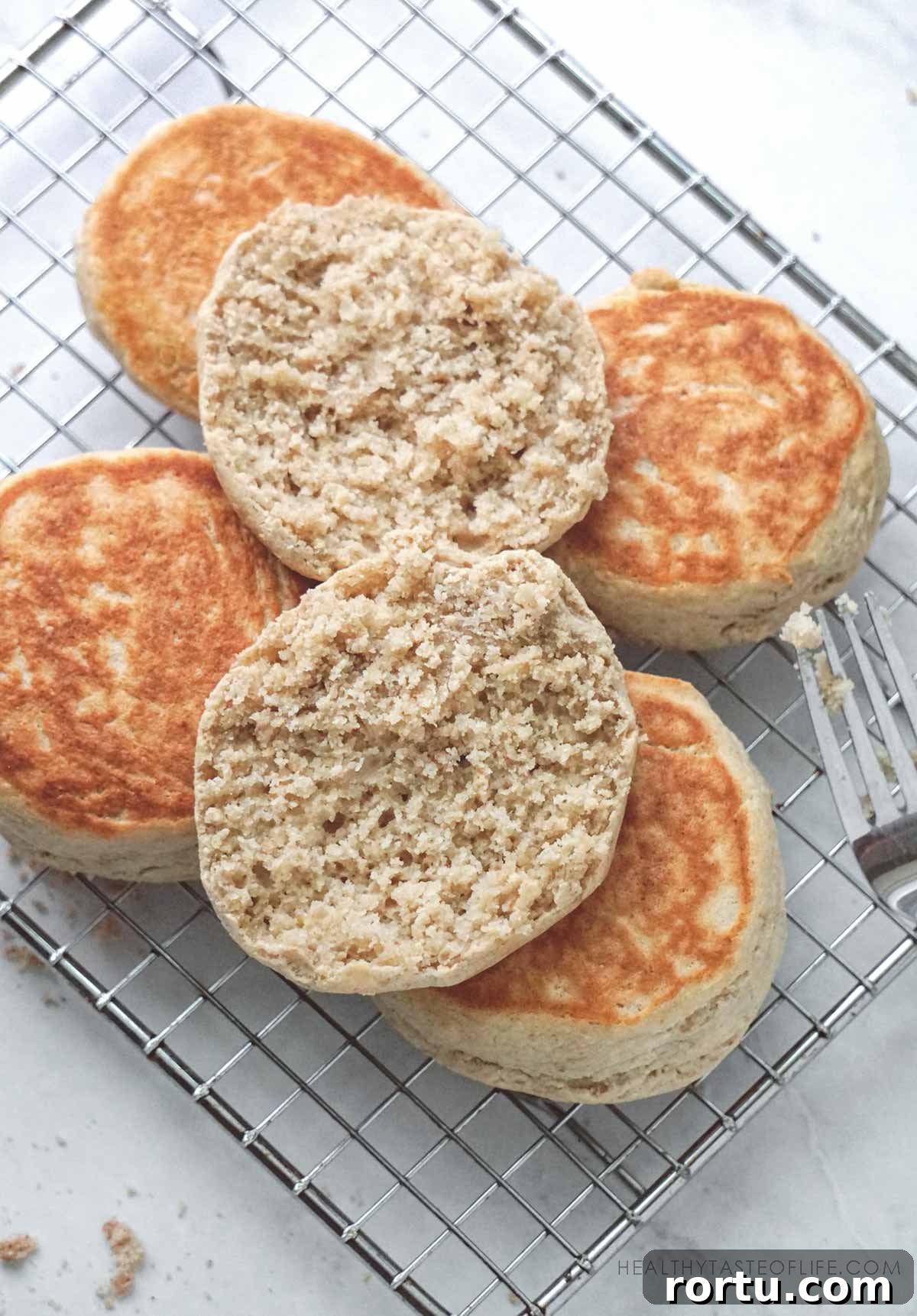
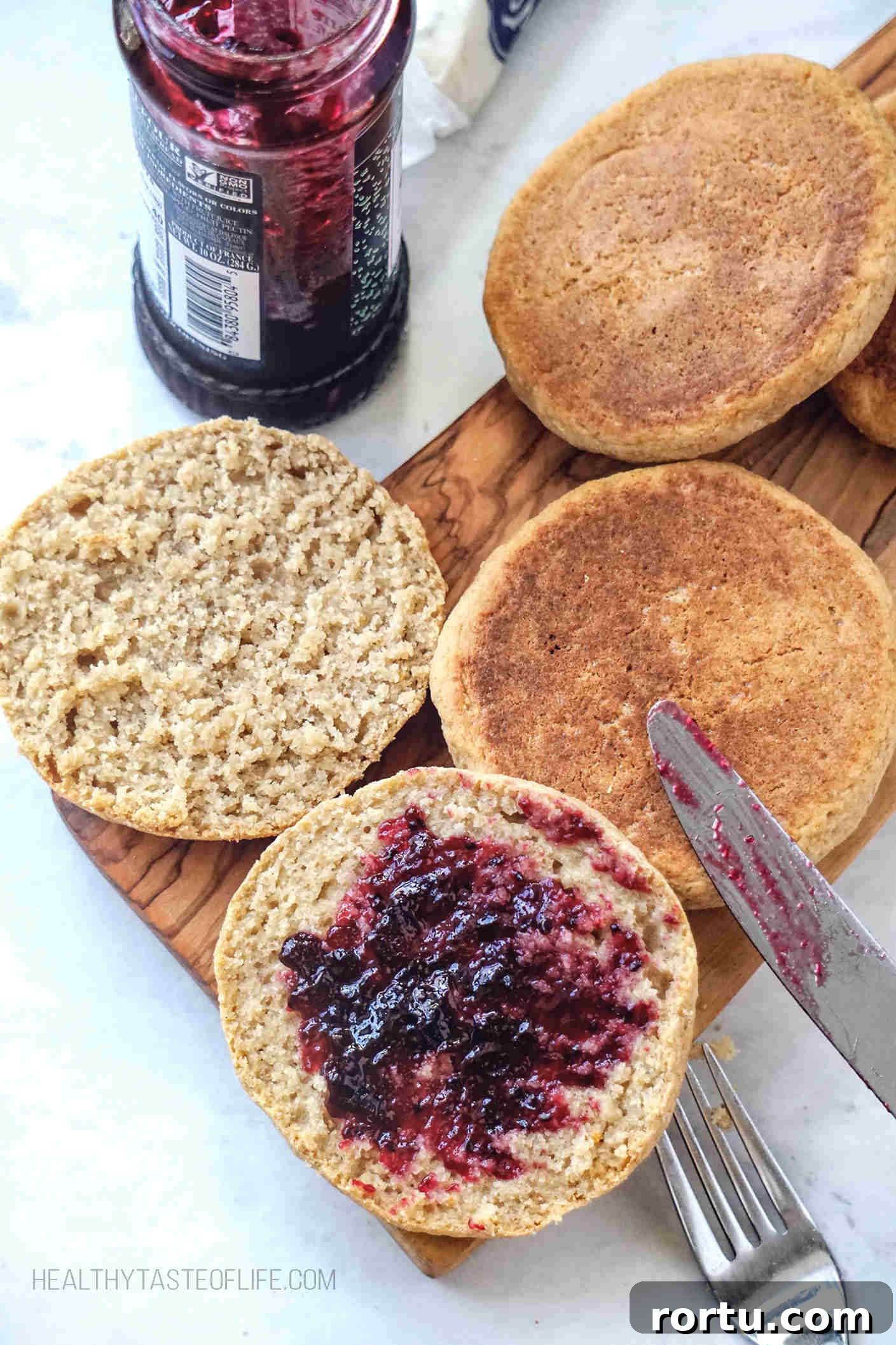
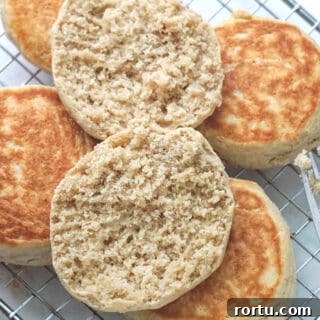
- Best “nooks & crannies”: fork-split after cooling (don’t knife-slice)
- Dough notes: Gluten-free muffin dough is wetter than wheat dough. Cooking on the skillet gives browning and structure so the muffins don’t spread; the oven finish ensures the centers cook through without burning the outside.
A quick note on fermentation and my experience
Sourdough fermentation transforms flour over time and improves flavor; many find fermented bread easier to digest than non-fermented bread. I bake gluten-free sourdough often and finally tested homemade sourdough English muffins — they beat store-bought in flavor and simplicity, and they require no commercial yeast.
The main requirement is an active, bubbly sourdough starter. If your starter isn’t active, give it a feed a few hours before mixing the dough. I tested adding an egg once and didn’t find a meaningful improvement in texture, so this version remains vegan.
Ingredients (and what each one does)
Use the exact amounts in the recipe card below; this section explains roles and swaps.
- Gluten-free sourdough starter (active or discard): flavor and fermentation base
- Oat flour (or sorghum): main flour providing body and structure
- Arrowroot flour: starchy binder that reduces crumbling
- Cassava flour: adds structure and chew
- Psyllium + fine flax meal: binders that manage moisture and improve GF structure
- Warm water or non-dairy milk: hydration
- Vegan butter or oil: richness and tenderness
- Baking soda + apple cider vinegar: quick lift added just before cooking (baking powder replacement)
- Salt and an optional sweetener: for flavor balance
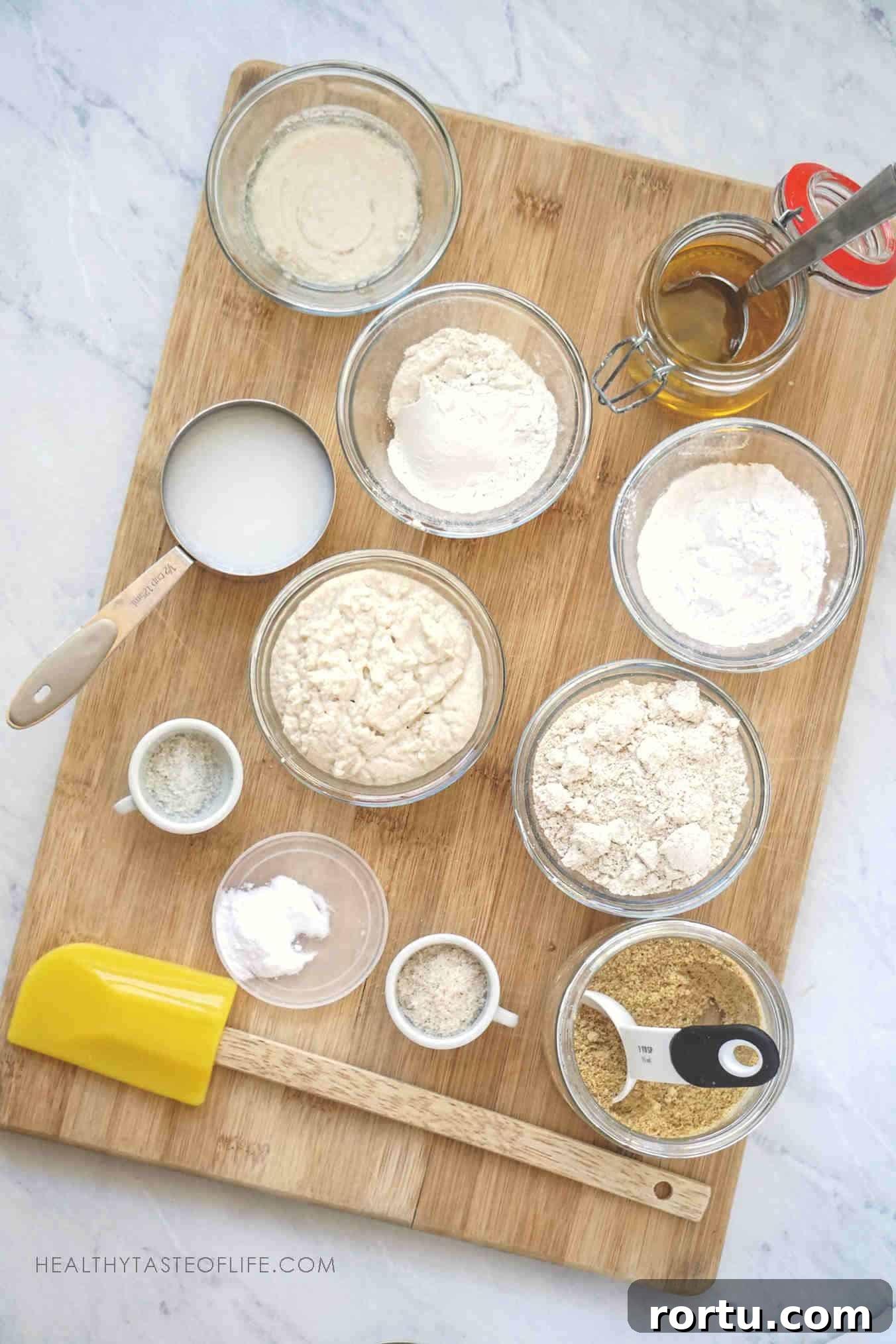
If you don’t have a starter, you can mix brown rice flour (1/2 cup) with warm water or plant milk (1/3 cup) as a short-term substitute, though an active starter yields best flavor.
Step-by-step: How to make gluten-free sourdough English muffins
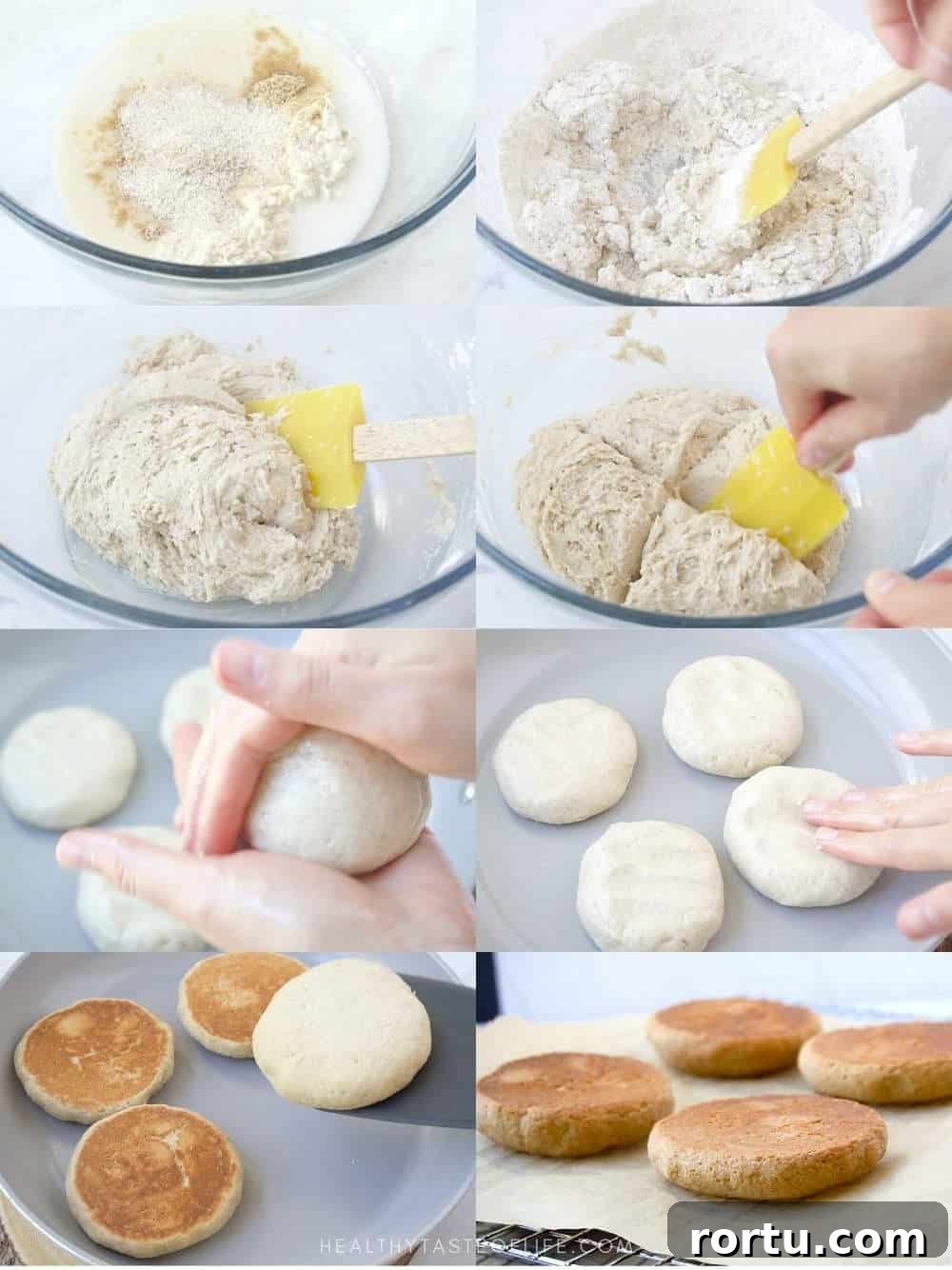
Step 1 — Make the dough
- Mix wet ingredients: Combine the starter and other wet ingredients first. Stir in psyllium and flax so they hydrate and thicken.
- Add dry ingredients: Stir in the flours and salt until you have a sticky dough — between batter and dough.
- Add leavening last: Immediately before cooking, mix in baking soda and apple cider vinegar to create bubbles. You can ferment the dough 1–2 hours for more tang, or cook right away.
Step 2 — Shape
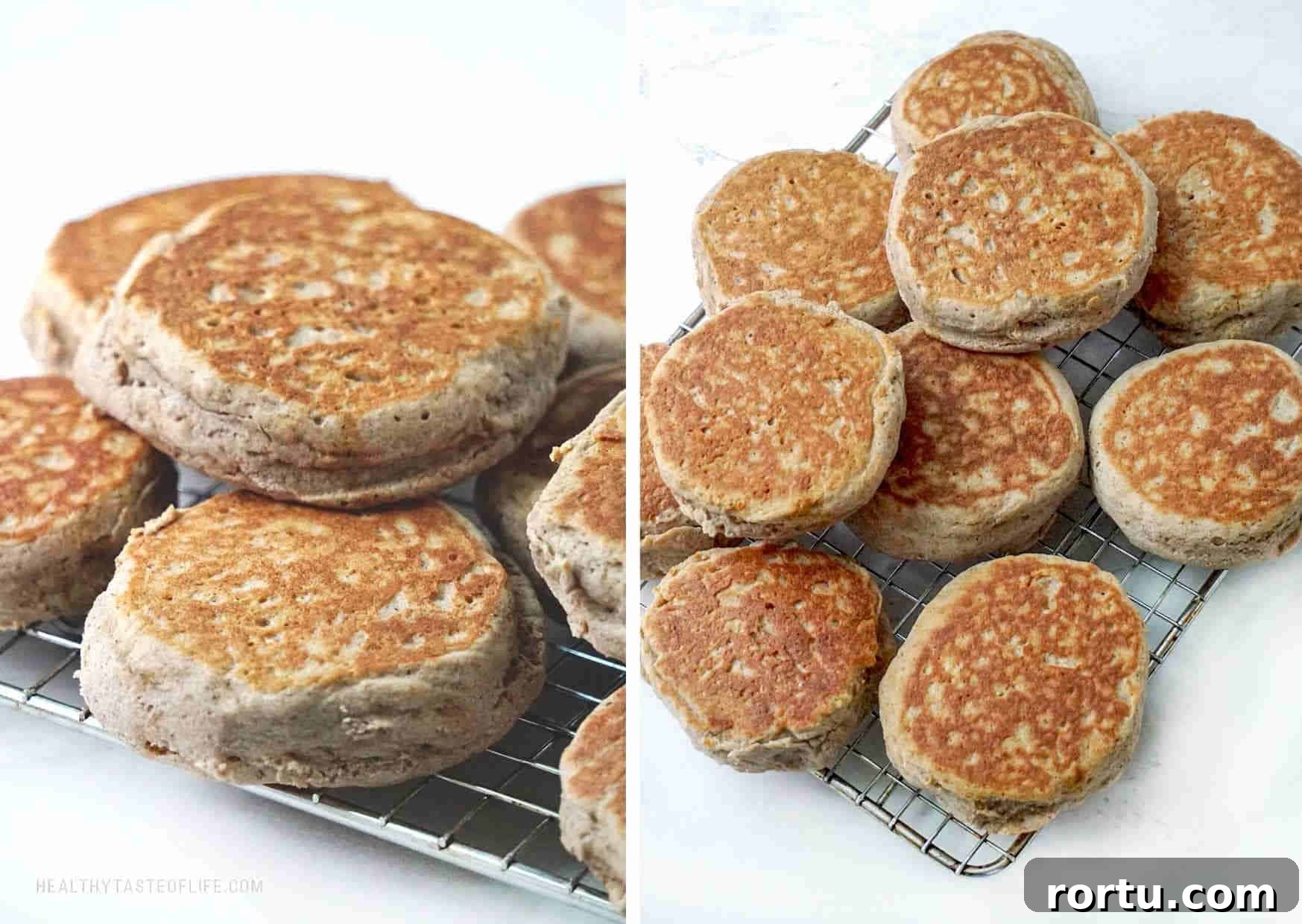
- Divide and form: Portion the dough (about 1/3–1/2 cup each), form rough balls with greased hands, place on a medium-low skillet and press into thick rounds. Brown both sides.
Step 3 — Cook
- Skillet first: Space the dough 1½–2 inches apart on a preheated skillet and press into rounds. Brown each side about 2–3 minutes on medium-low heat.
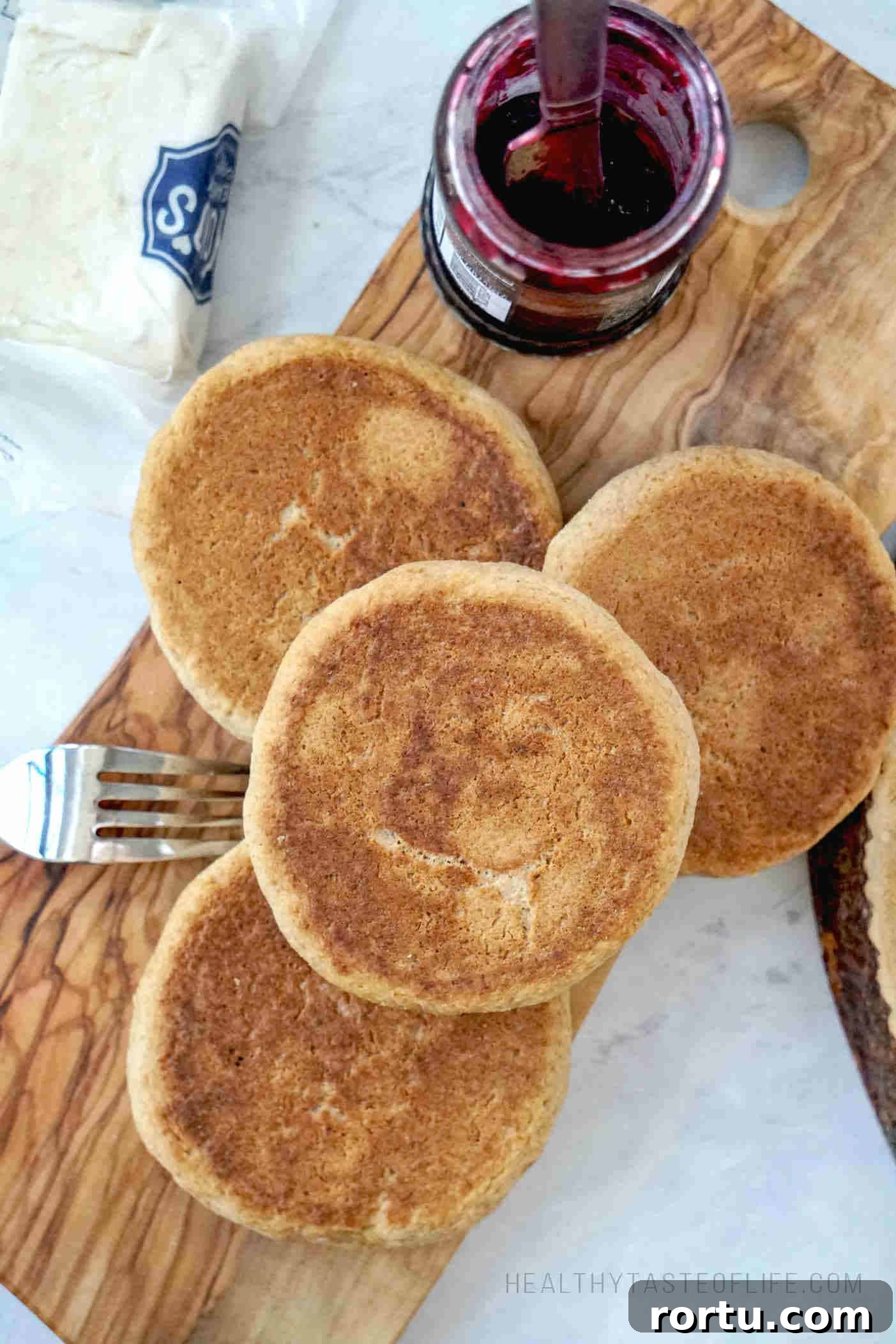
- Oven finish: Transfer to a 350°F (175°C) oven and bake until cooked through, about 20–25 minutes. Cool at least 20 minutes before eating.
Troubleshooting
- Dough too runny? Your starter or flour may be wetter. Add 1–2 tablespoons extra oat or sorghum flour and rest 5 minutes.
- Dough too thick to shape? Add 1–2 tablespoons warm water or milk and stir.
- Muffins brown too fast on the skillet? Lower to medium-low heat so they brown slowly without burning.
- Centers undercooked? Don’t skip the oven finish; bake a bit longer.
- Crumbly muffins? Don’t reduce psyllium or arrowroot — they give structure.
Ways to serve (savory & sweet)
- Savory: avocado, fried egg, tomato, basil — breakfast sandwich style
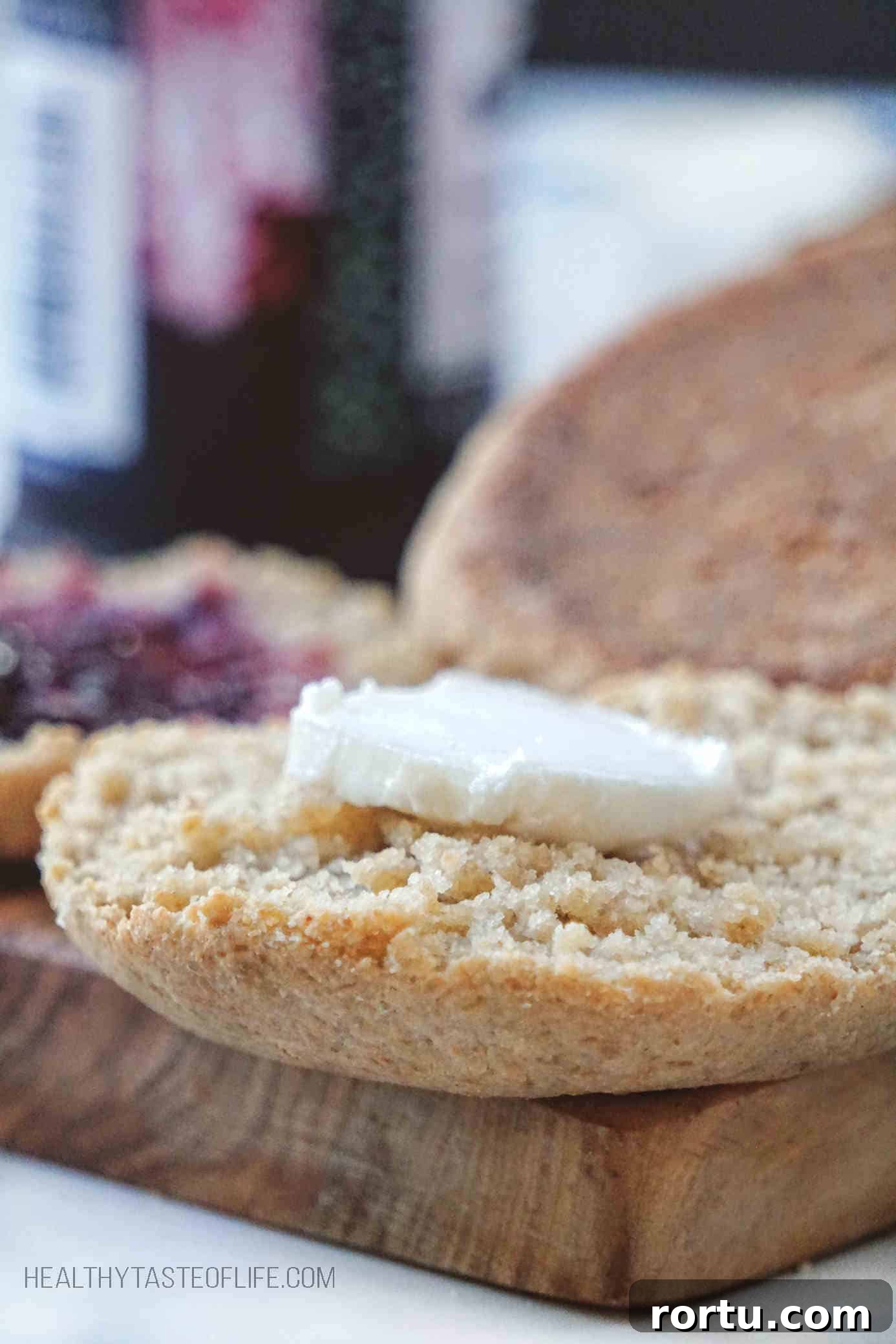
- Sweet: jam, nut or seed butter, or honey (if not vegan)
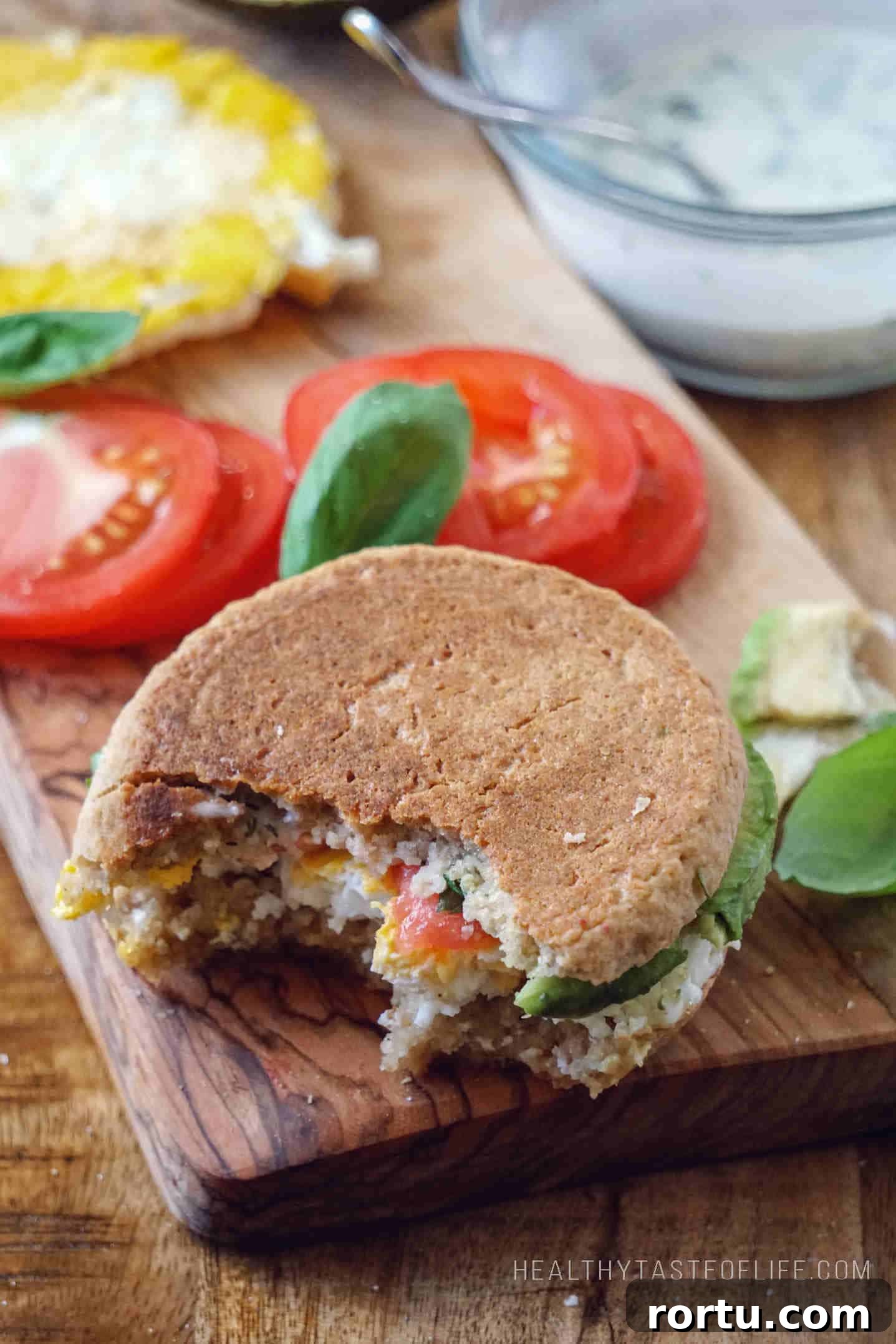
For larger sandwiches, consider using gluten-free sourdough buns.
Storing tips
- Fresh muffins keep at room temperature 3–4 days. For longer storage, pack in freezer bags and freeze up to 3 months. Pre-slicing helps separate them later while frozen.
- To defrost: thaw overnight in the refrigerator, or reheat in a conventional oven or toaster (use the frozen setting). Fork-split the muffin for the best texture.
Flour variation: try sorghum or buckwheat flour for a whole-grain version.
Tried this recipe? I’d love to hear how it turned out! Tap to rate or leave a quick comment — your feedback helps other readers.
Gluten-Free Sourdough English Muffins (Vegan, No Yeast)
10 mins
20 mins
30 mins
Ingredients
- ½ cup gluten-free sourdough starter (active or discard)
- ⅓ cup oat flour (or sorghum)
- ⅓ cup arrowroot flour (or other starchy flour)
- ¼ cup cassava flour
- 1 tsp psyllium husk
- 1 tbsp fine flax meal
- 2 tbsp vegan butter, melted (or oil)
- ⅓ cup + 1 tbsp warm non-dairy milk or water
- ¾ tsp baking soda
- ¾ tsp apple cider vinegar (or lemon juice)
- ¾ tsp sea salt
- 1 tbsp maple syrup (optional)
Instructions
Make the dough
- Mix all wet ingredients including the starter in a large bowl. Add psyllium husk and flax meal so they hydrate and form a slightly gelatinous texture.
- Stir in the dry ingredients until the mixture is sticky and soft — between batter and dough. You may ferment the dough 1–2 hours for more tang, or continue right away.
- When ready to cook, stir in baking soda and apple cider vinegar to create air bubbles and lift. Preheat a skillet to medium-low and set the oven to 350°F (175°C).
Divide and shape
- Use a spatula to divide the dough into equal portions (1/3–1/2 cup each) and shape into rough balls with greased hands.
Cook (skillet + oven)
- Place balls on the preheated skillet spaced at least 1½–2 inches apart. Press into thick rounds and brown both sides (about 2–3 minutes per side).
- Transfer to a 350°F oven and bake until cooked through, about 20–25 minutes. Let cool at least 20 minutes before serving.
Notes
- Dough should be sticky — between batter and dough.
- Add baking soda and vinegar right before cooking for best lift (this replaces baking powder).
Flour variations: If you don’t have oat flour, grind gluten-free rolled oats in a blender until fine. You can also use a gluten-free pastry flour mix.
Storage + freezing: Fresh muffins keep 3–4 days at room temperature. Freeze up to 3 months; pre-slice to separate while frozen.
Defrost: Thaw overnight in the fridge or reheat in an oven or toaster. Fork-split for best texture; don’t slice with a knife.
Nutrition
Calories: 223 kcal |
Carbs: 37.5 g |
Protein: 2.8 g
Nutrition info is an estimate from an online calculator.
More gluten-free baking, breakfast, and sourdough recipes
- Strawberry Muffins (GF, DF)
- GF / DF Blueberry Muffins + Crumb Topping
- Crepes + Fillings (Gluten & Dairy Free)
- 3 Waffle Recipes + Toppings (GF/DF)
- Oat Flour Pancakes: Moist & Fluffy
- GF Sourdough Pancakes — DF
- Gluten-Free Sourdough Baguette (No Yeast Added)
©HealthyTasteOfLife. Content and photographs are copyright protected and require permission to use. Sharing the link to this recipe is encouraged and appreciated.