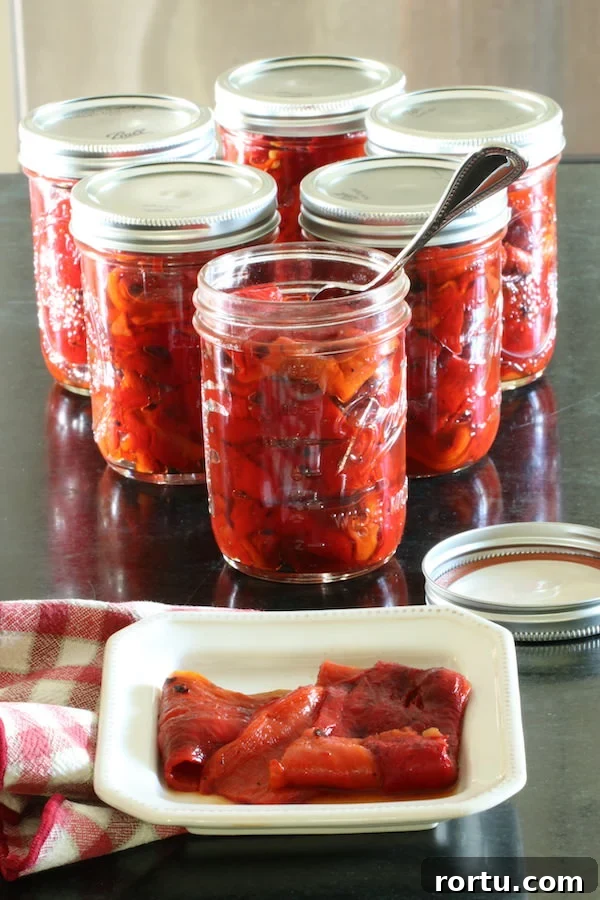
Whether you plan to roast a few peppers for a side dish or preserve a large harvest, this guide with video explains how to grill, steam, peel, and freeze roasted peppers. Grilling is the quickest and simplest method, especially when you have a peck or more to process.
Each summer my husband Jamie grows several pepper varieties that produce abundantly. He plants pimentos for relish, Karlo peppers for drying into paprika, jalapeños for salsa, and Carmen peppers for roasting.
This year our Carmen crop yielded over two bushels. We’ve already roasted and jarred ten pints, with more to go. After many seasons of preserving peppers, I’ve refined a reliable routine for producing consistent, flavorful results.
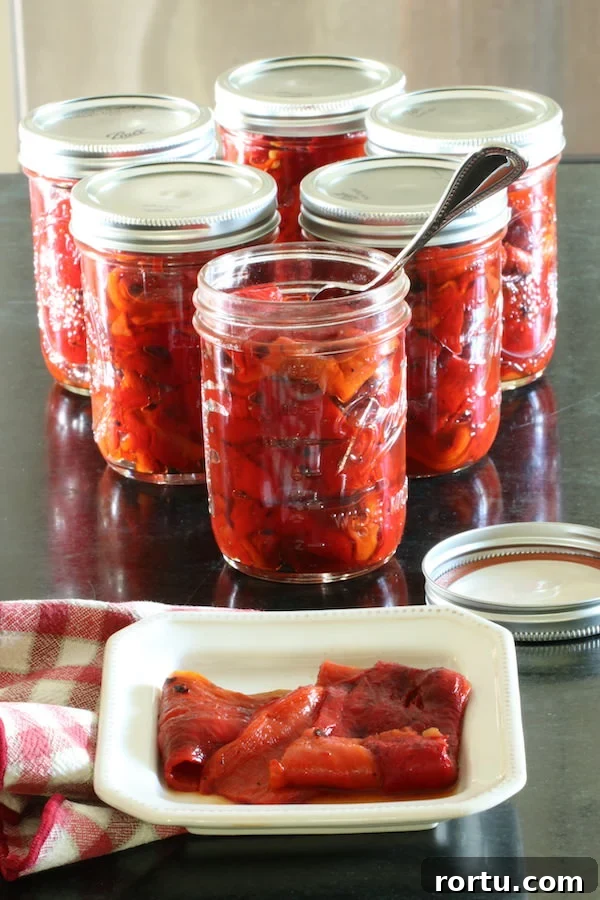
This “how to grill peppers” guide covers:
- Pepper varieties suited for roasting
- How to roast peppers on the grill
- How to steam roasted peppers to loosen the skins
- How to remove skins, stems, and seeds
- Two easy methods for freezing roasted peppers
Pepper varieties
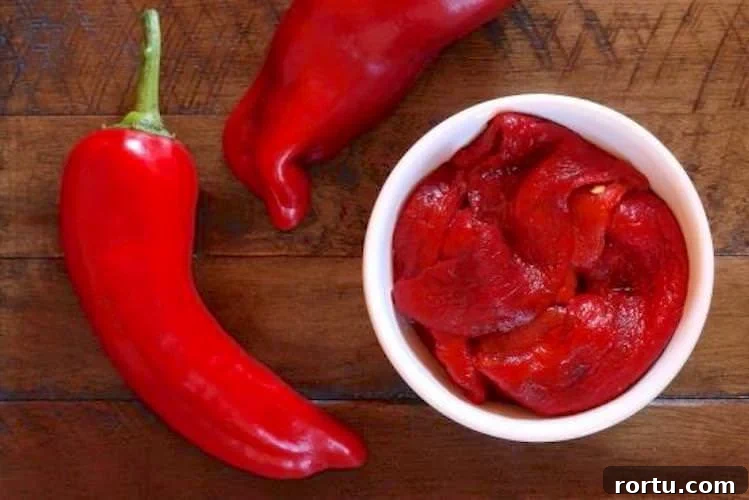
Choose peppers with thicker skins because thin-skinned varieties are harder to peel. We grow a horn-shaped Italian sweet pepper called Carmen; it yields well, roasts beautifully, and peels easily. Other good choices for roasting include Karlo (sweet), Caballero Ancho (medium hot), Corno di Toro (sweet/spicy), and fully ripened bell peppers.
Use fully ripened peppers
If you grow your own, leave peppers on the plant until they reach full color—red, orange, yellow, chocolate, purple, or whatever the mature color is for that variety. Fully ripened peppers have thicker skins, more developed flavor, and higher levels of nutrients like vitamin C, beta‑carotene, lycopene, lutein, and zeaxanthin. They also tend to be easier to digest and either sweeter or hotter depending on the type.
Step 1 – Grilling
- Wash whole peppers; leave stems intact
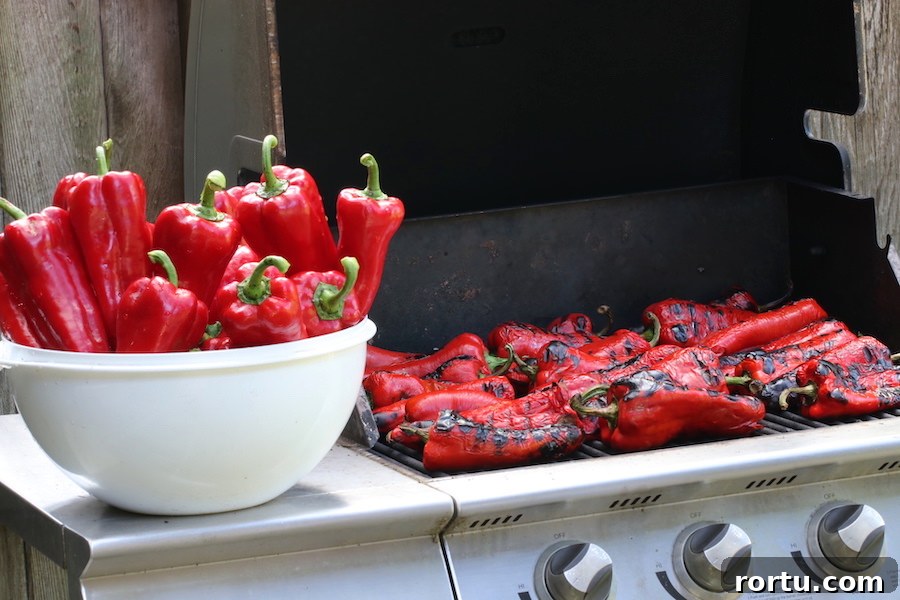
- Preheat a gas grill on high, then reduce to medium
- Arrange peppers on the grill and close the lid
- Roast about five minutes, then turn with tongs
- Roast another five minutes with the lid closed
- Open the lid and turn peppers so all sides char evenly
- Peppers are done when they collapse slightly and are charred on all sides
Carcinogens when grilling vegetables
While cooking meat at high temperatures can create heterocyclic amines (HCAs), grilling vegetables—even with charring—does not produce the same HCAs associated with cooked meat.
Step 2 – Steaming roasted peppers
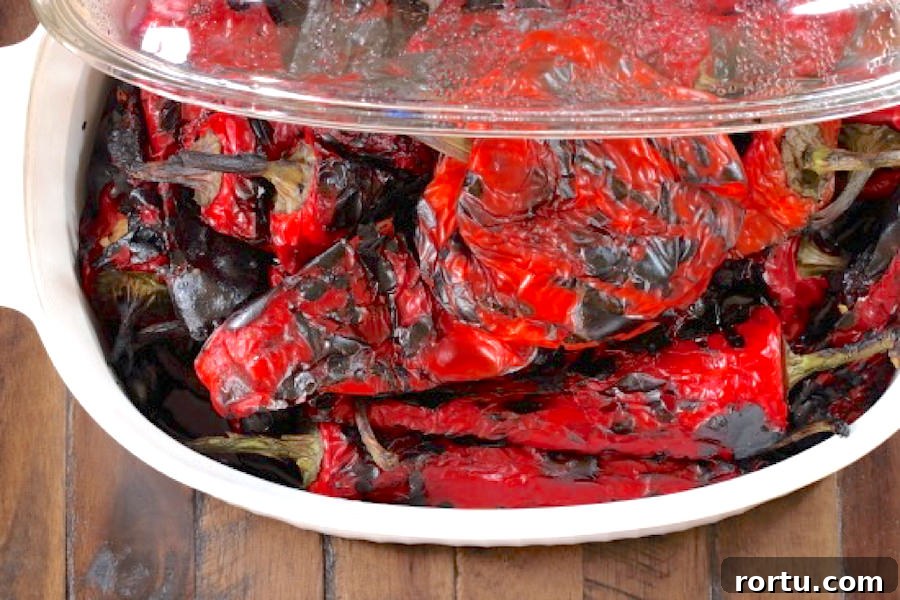
After grilling, steaming the peppers loosens the skins and makes peeling easier.
Why not a paper bag
Placing hot peppers in a brown paper bag is a common suggestion, but it has drawbacks: ink, glue, or recycled materials in bags can release fumes when heated, and juices from roasted peppers are absorbed by the bag. I prefer methods that capture those flavorful juices.
Better steaming methods
For a few peppers, use the plate method. For larger batches, use a covered casserole or pot.
Plate Method
Place roasted peppers on a large plate and cover with a second plate flipped over. Let them steam for several minutes.
Casserole Method
Place peppers in a covered casserole or pot to steam. This works well for large quantities and traps the juices.
Step 3 – Peeling and removing stems and seeds
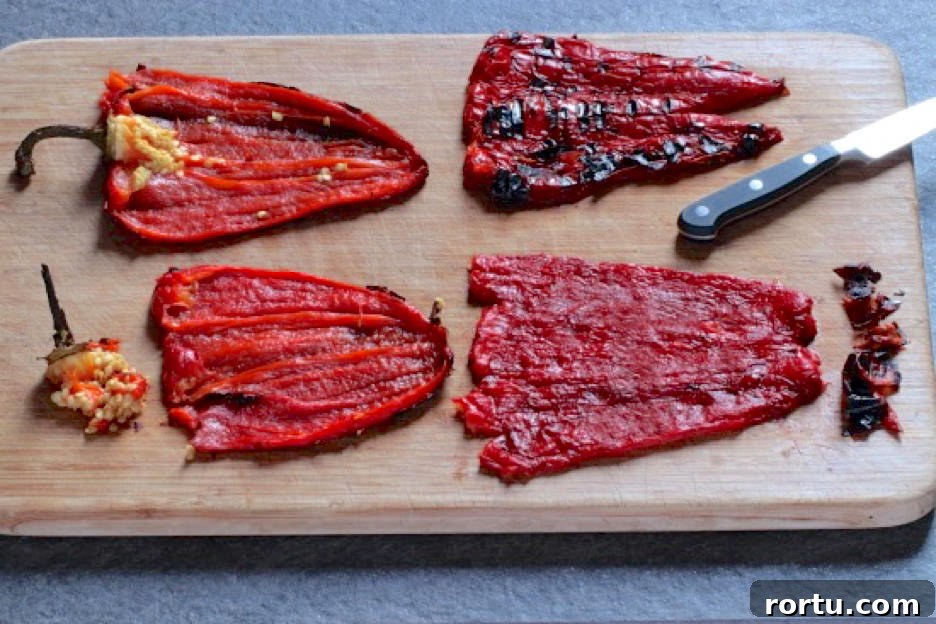
Place a steamed roasted pepper on a cutting board. Slice lengthwise from stem to tip through the top layer. Hold the stem and use a paring knife to free the pepper from the stem so it lies flat. Remove the seed cluster and any loose seeds.
Turn the pepper over and scrape the skin away with a paring knife using a sweeping motion. Some people peel by hand, but I find using a knife faster and less messy. Avoid rinsing peppers under running water since that washes away juices and flavor.
Step 4 – Freezing (optional)
Roasted peppers will keep about a week in the refrigerator but freeze very well for longer storage.
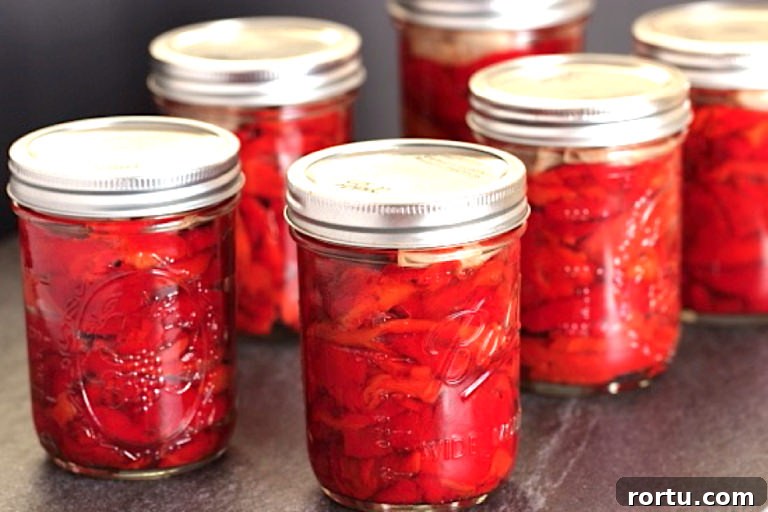
Freezing in glass jars
- Pack peppers into clean, pint-sized mason jars.
- Observe the “fill line” near the jar top and do not overfill; expansion during freezing can crack jars.
- Optionally place a piece of parchment on top of the peppers to reduce freezer burn.
- Cap, label, and freeze. Store at 0°F (-18°C) or lower; rear and lower freezer shelves are typically coldest.
Freezing in bags
For flatter, stackable storage, freeze peppers in vacuum-seal bags or heavy-duty freezer bags. A vacuum sealer removes air and preserves quality; many commercial bags are BPA-free. If using zip-top bags, press out as much air as possible, then use a straw to remove remaining air before sealing. Consider double-sealed freezer bags to reduce freezer burn risk.
Ways to enjoy roasted peppers
Roasted peppers are versatile. We enjoy them straight from the jar as a side or include them on holiday antipasto platters. Other popular uses include:
- Chopped or blended into hummus
- As a pizza topping
- Baked into casseroles
- Draped over baked potatoes
- Added to wraps and sandwiches
- Made into roasted red pepper soup
- Used as a garnish
- Blended into cashew or other plant-based cheeses
- Drizzled with olive oil or balsamic and sprinkled with salt and herbs
- Served on crackers or added to salads, pasta, and stir-fries
If you enjoyed this guide, you might also like other recipes and preserving tips for using your garden harvest.