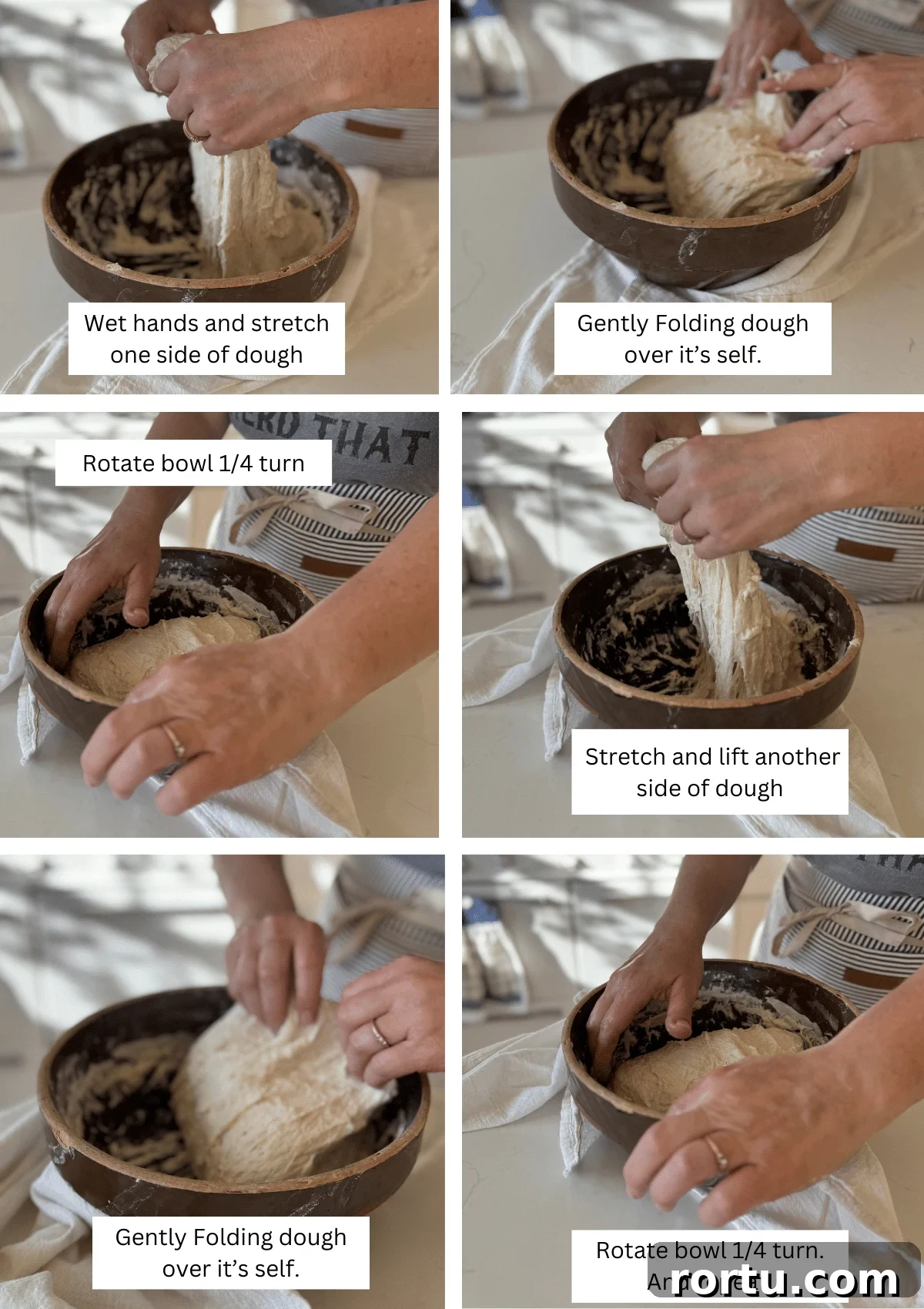
Want to improve your sourdough loaves? The stretch-and-fold method gently develops the dough’s natural gluten, creating an elastic structure that traps air bubbles and delivers a better rise.
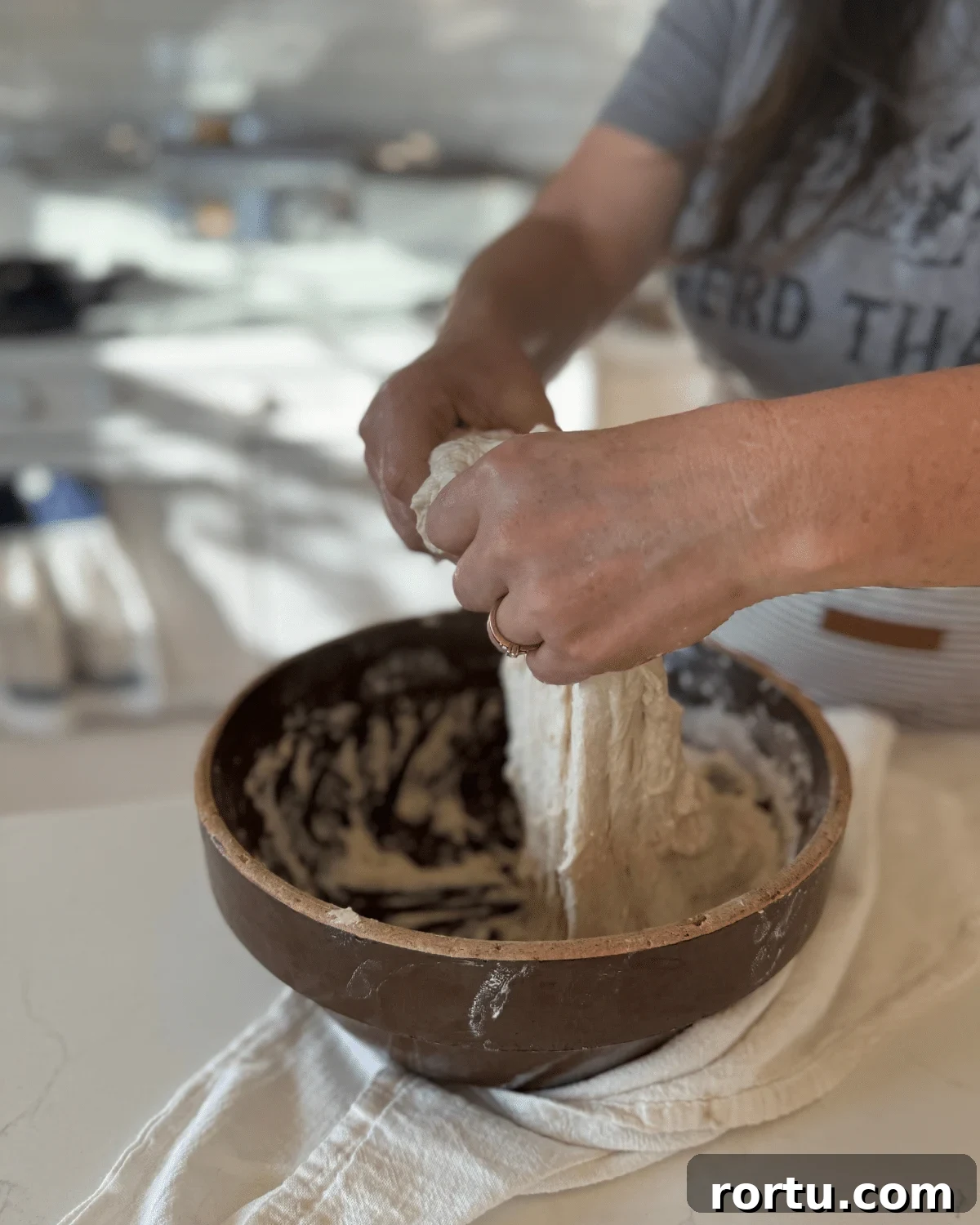
Achieving a great sourdough rise often comes down to technique. The stretch-and-fold is a simple, low-effort practice that has a big impact on dough strength and oven spring. Use it for country loaves, sandwich breads, or soft dinner rolls.
How it Works
Sourdough relies on a starter of wild yeast and bacteria that ferment the dough and create flavor. Flour contains gluten-forming proteins; when hydrated and handled correctly, those proteins bond to form a network that gives bread structure. Stretch-and-folds encourage the gluten network to organize without aggressive kneading, allowing the dough to retain gas and rise more effectively.
Gentle stretching and folding develops elasticity and surface tension so the dough can hold air and create an open, airy crumb.
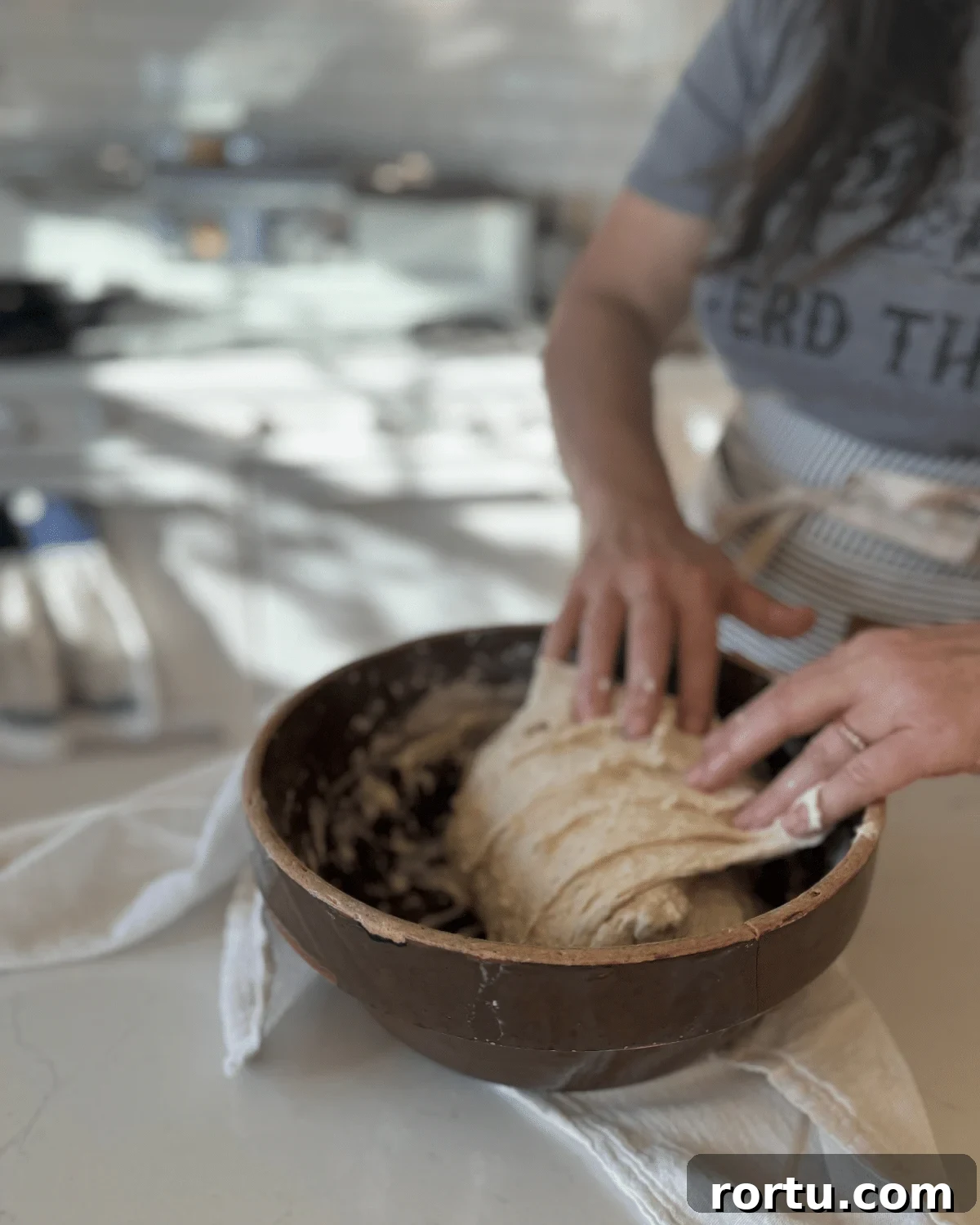
How to Stretch & Fold Sourdough
Follow these steps each time you perform a set of stretch-and-folds:
Wet your hands: Dough can be sticky; damp hands help prevent tearing and make the motion smoother.
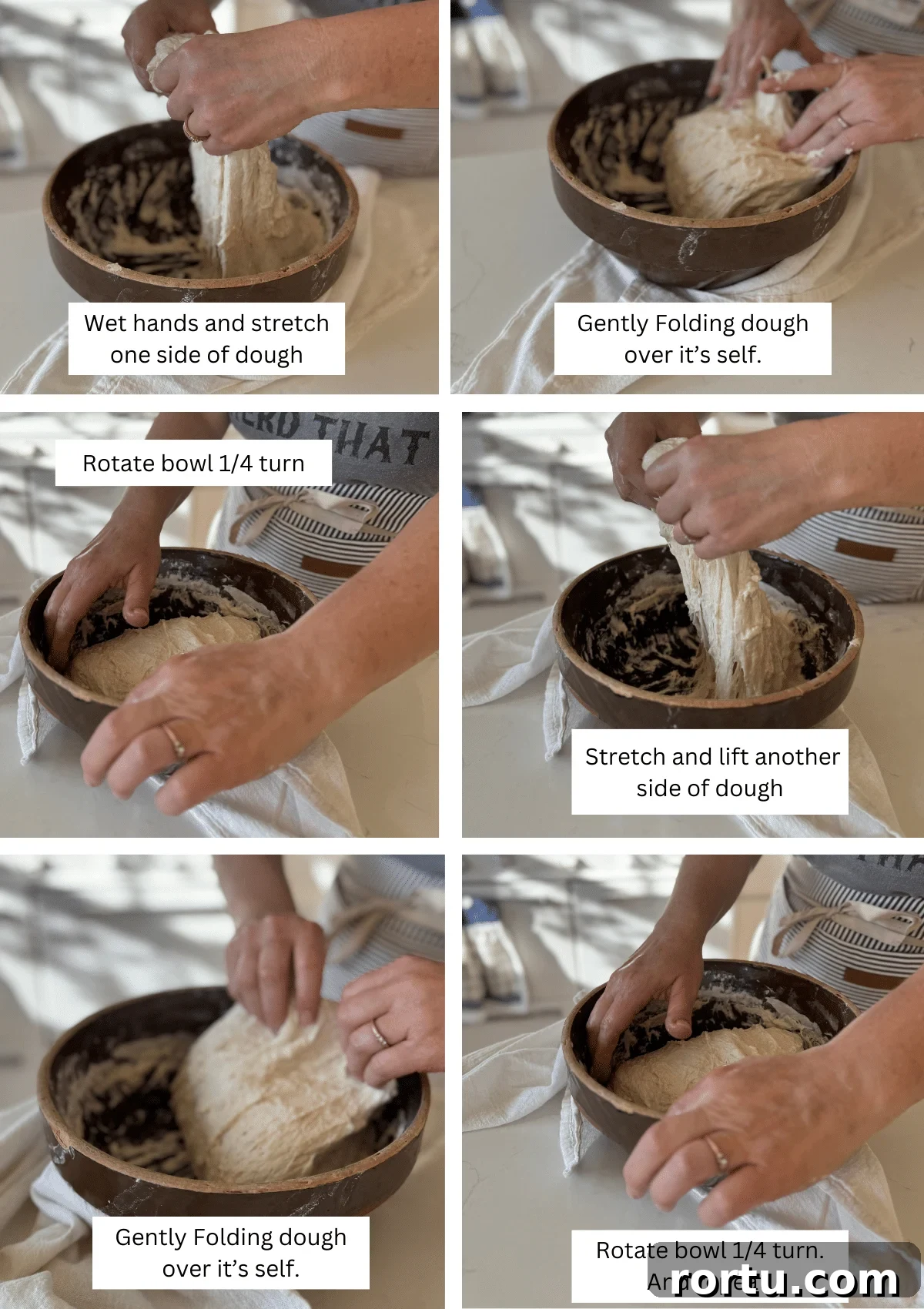
Reach, stretch, fold: Gently reach under one side of the dough, lift it upward to stretch it, then fold it back over the center.
Rotate and repeat: Turn the bowl or container about 90° and repeat the same motion on the next side. Complete the sequence for all four sides so the dough gets even strengthening.
Frequency
Perform sets of stretch-and-folds during bulk fermentation until the dough shows improved strength and structure. Timing depends on hydration and dough temperature:
- High-hydration doughs (wetter/looser): work in shorter intervals, roughly every 30–60 minutes.
- Drier doughs: allow longer rests between folds, typically 1–2 hours.
The total number of sets can vary; aim for the point where the dough becomes smoother, more cohesive, and slightly puffy.
Tips & Troubleshooting
If the dough sticks to your hands, wet them slightly more. If you notice tearing, be gentler and allow an extra rest so the gluten relaxes. Over time you’ll learn how your specific flour, hydration, and environment respond—practice makes the process intuitive.
With consistent stretch-and-folds the dough will develop strength, surface tension, and gas retention. The result is better oven spring and an open, tender crumb.
Embrace the technique: Stretch-and-folds are a simple, effective step in artisan sourdough baking. Add them to your routine and expect lighter loaves, improved rise, and a more open texture.